
Ishikawa is known in Japan as a treasure trove of food, and it earns that title.
Its location along the Sea of Japan guarantees a constant supply of exceptional seafood throughout the year. The Noto Peninsula, recognised by the United Nations as a Globally Important Agricultural Heritage System, produces rice and vegetables of remarkable quality. And the pure waters that flow down from Mt Hakusan nourish everything from the rice paddies to the livestock. Ishikawa’s ingredients begin with an unfair advantage.
What happens to those ingredients in the hands of the prefecture’s chefs is something else entirely. Ishikawa cuisine has been shaped by centuries of culinary refinement under the wealthy Maeda clan, whose influence elevated local cooking to an art form. Today, the best meals in Ishikawa are not just something to eat. They are something to experience: served on Kutaniyaki ceramic ware and Wajima lacquerware, garnished with seasonal flowers and touches of gold leaf, and built from produce that speaks unmistakably of this particular corner of Japan.
Here is what you should be eating when you visit.
Kaga Kaiseki
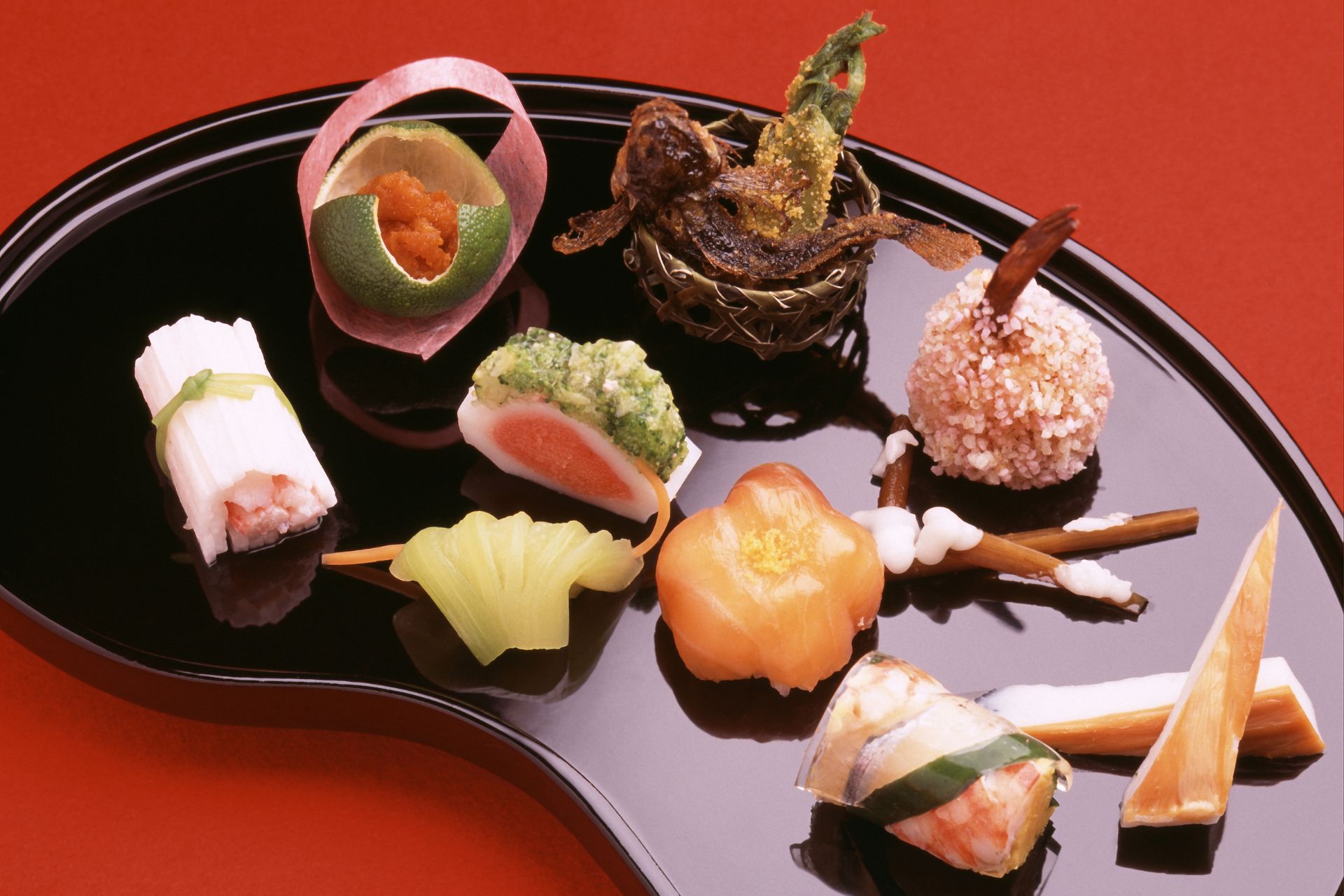
Kaga Kaiseki is Ishikawa’s answer to the Japanese kaiseki tradition: a multi-course banquet that is as much a visual experience as a culinary one.
Its roots lie in Kyoto-style cuisine, which was later blended with influences from Edo to produce what is known today as Kaga cuisine. The result is a style of cooking that is distinctly its own. Locally sourced ingredients set the standard: seafood kept live until the moment of preparation, rice grown in fields irrigated by the snowmelt of Mt Hakusan, and seasonal Kaga vegetables, branded as Kaga yasai, harvested and used at their peak.
What makes Kaga Kaiseki remarkable is not just what is on the plate but how it arrives. Each course is arranged on Kutani ceramic ware or served atop Yamanaka lacquerware trays, garnished with carefully cut vegetables, seasonal leaves and flowers, and sometimes a touch of gold leaf. Every detail has been considered. The meal moves at a deliberate pace, and by the time the final course arrives, you understand why Ishikawa has long been considered one of Japan’s great culinary destinations.
Jibuni
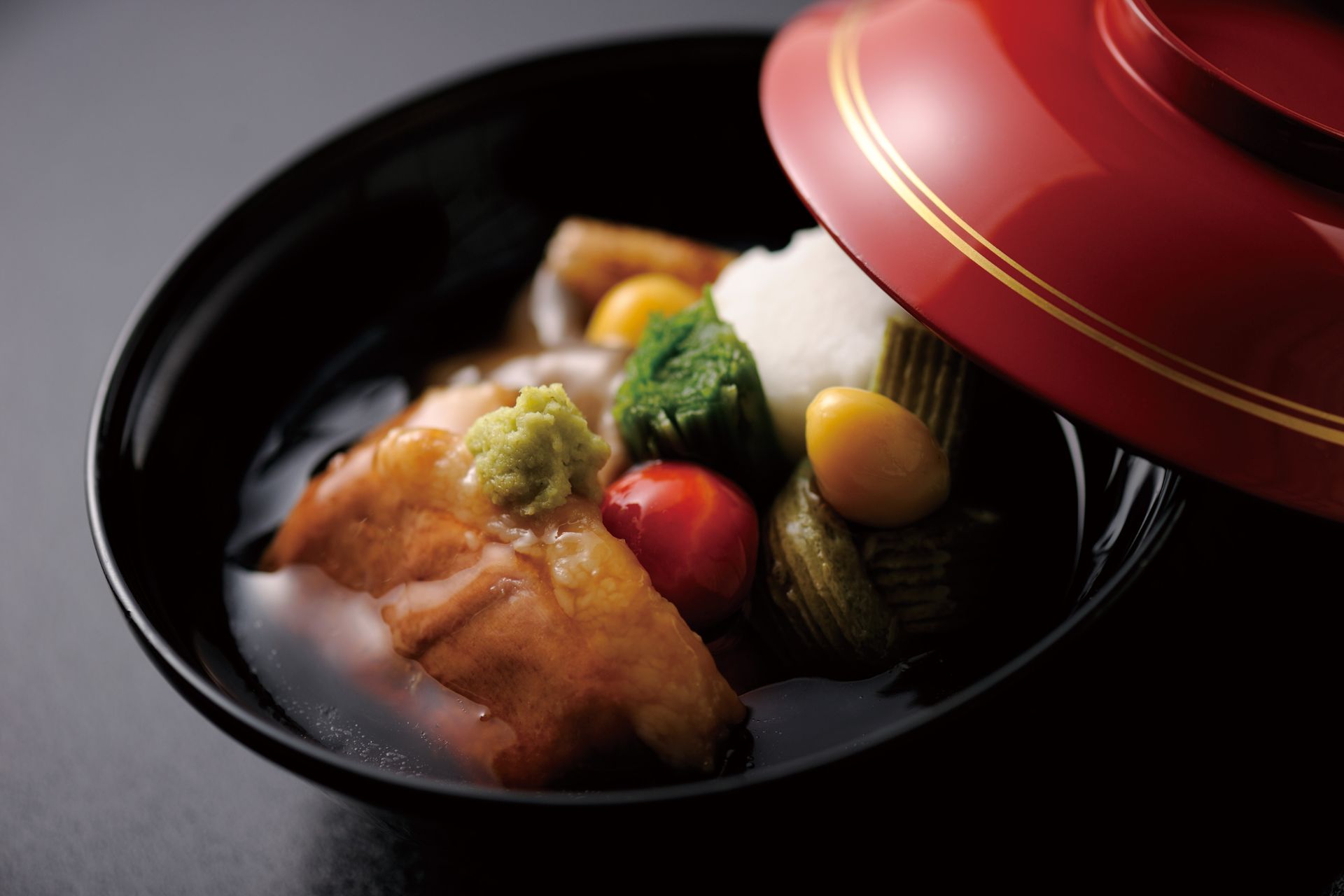
If Kaga Kaiseki represents Ishikawa’s most formal culinary tradition, Jibuni is its heart.
This local stew has been a staple of Ishikawa cooking since feudal times. Duck is coated in flour and simmered together with seasonal vegetables and sudare-fu, a local wheat gluten formed in a bamboo-mat pattern, in a deeply flavoured broth made from dashi, soy sauce, sake, and mirin. The flour coating thickens the broth as it cooks, giving it a rich, almost silky consistency that clings to each piece of meat and vegetable. Finished with a touch of wasabi, it is an unpretentious dish, equally at home in a Kaga Kaiseki course and on a home kitchen table, and it is deeply, satisfyingly good on a cold winter evening.
Sushi
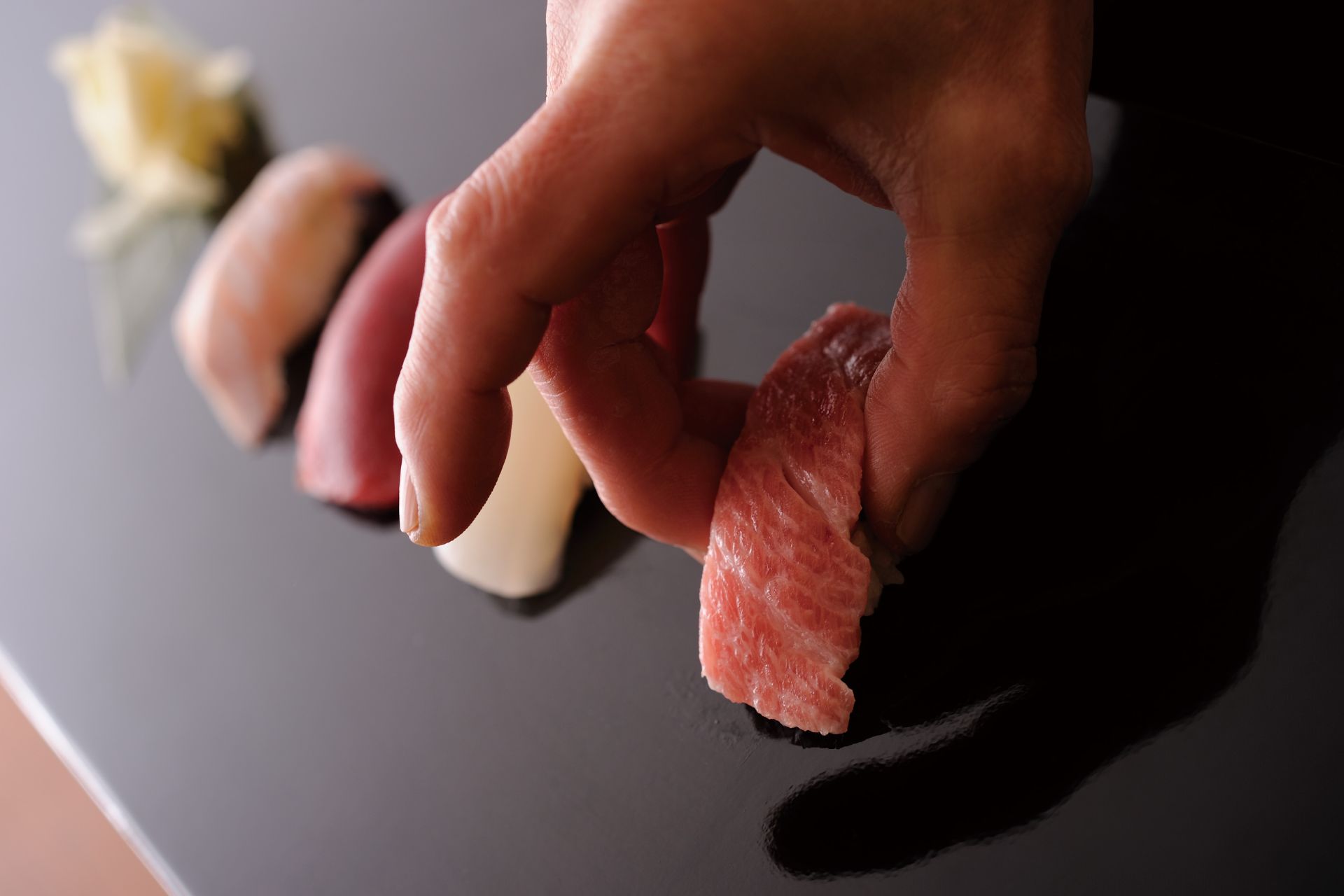
Ishikawa is arguably home to the best sushi in Japan, and the case is not difficult to make.
The Sea of Japan, where warm and cold ocean currents meet, is exceptionally rich in minerals and plankton. A layer of cold, oxygen-rich water sits just below the surface, maintaining near-freezing temperatures year-round and creating ideal conditions for high-quality seafood to develop. That seafood is matched with rice grown in Ishikawa’s mineral-rich fields, producing grains of a quality that sushi chefs in Tokyo and Osaka have been known to seek out.
The result is sushi that is confident in its ingredients and precise in its execution. Ishikawa’s sushi scene follows the seasons: winter brings snow crab, sweet shrimp, and yellowtail; spring favours delicate white fish; summer highlights abalone and squid; autumn is the season for nodoguro, the rich, fatty blackthroat seaperch that has become one of Kanazawa’s most celebrated ingredients.
Kobakogani
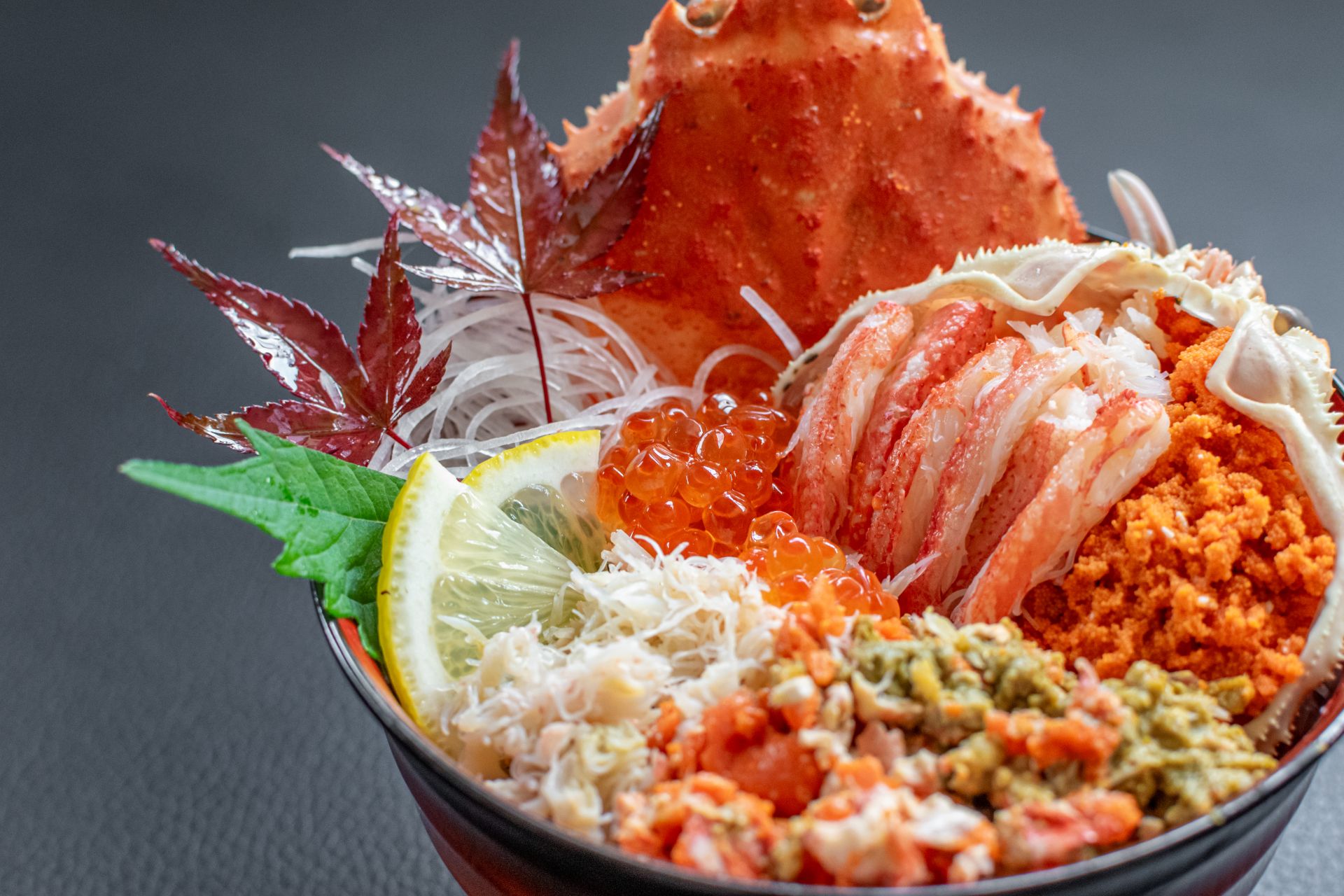
Every winter in Ishikawa, something small and remarkable arrives at the fish markets: the kobakogani.
The name means “little jewel box,” and it is well earned. Kobakogani is the female snow crab, roughly half the size of its male counterpart but prized by locals for what it holds rather than how much meat it contains. Inside the shell are uchiko, orange-coloured immature eggs with a rich, concentrated flavour, and kani miso, the creamy crab innards. In the abdomen are sotoko, dark granular eggs with a satisfying pop. Together, they deliver a depth of flavour and texture that regular crab simply cannot match.
The fishing season for kobakogani is short and strictly regulated, running from November to late December. What is caught stays almost entirely in Ishikawa as the crab deteriorates quickly and rarely makes it to markets in other prefectures. For visitors, this makes it a genuinely local experience.
The most common way to eat it is simply boiled, served with vinegar and soy sauce so that nothing distracts from the flavour inside the shell. It also appears in sushi and rice dishes, but boiled in the shell and eaten by hand at a market restaurant is the way the locals do it.
Noto Beef
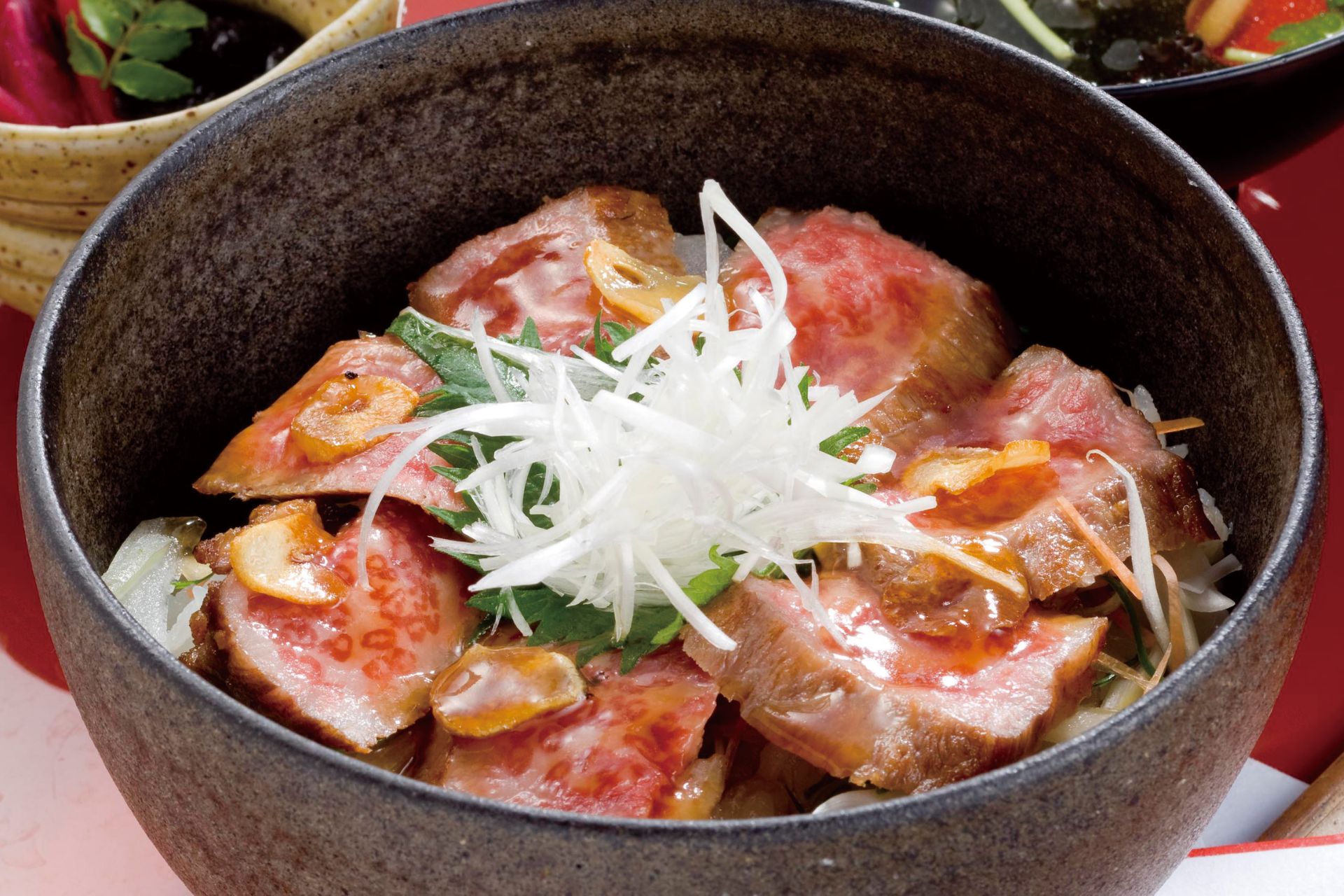
Noto beef is a brand of kuroge wagyu, the Japanese black cattle breed responsible for the country’s most prized beef, raised on the Noto Peninsula within Ishikawa Prefecture. The brand certification system was established in 1995, but the history of cattle farming on the peninsula runs much deeper. Breeding stock was brought to Noto from Tottori Prefecture during the Taisho era and from Hyogo Prefecture shortly after, and the crossbreeding that followed produced cattle well suited to the terrain and climate of the coast.
What makes Noto beef distinctive among Japan’s many wagyu brands is its rarity and its flavour profile. The peninsula’s small scale means production is limited to around 900 head per year, and nearly all of it is consumed within Ishikawa. The fat is high in oleic acid, giving the beef its characteristic richness and a clean, melt-in-the-mouth quality. At the highest certification level, Noto beef must grade at A5 rank or meet strict oleic acid thresholds. The flavour has been described as carrying notes of caramel and walnut, with a slightly firmer bite than some other wagyu varieties.
Noto beef is best enjoyed as a steak, where the quality of the meat speaks for itself, or in shabu-shabu, where thin slices cooked briefly in broth let the fat’s flavour come through cleanly. Either way, finding it outside of Ishikawa is almost impossible, which makes eating it here feel like a privilege rather than just a meal.
Agehama Salt
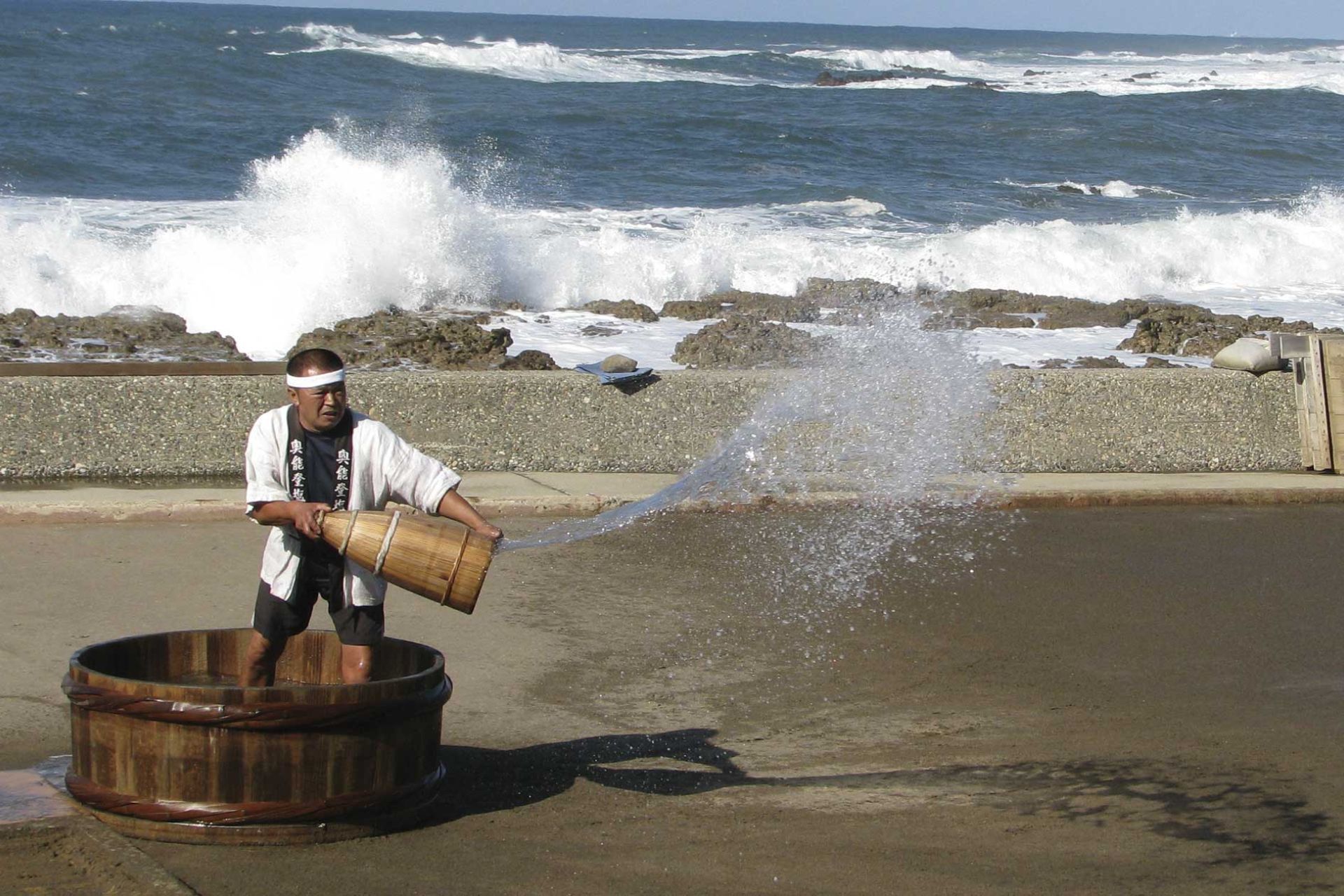
Noto sea salt has earned a reputation as one of the finest salts in Japan, and the reason begins with how it is made.
The Agehama Enden method of salt farming, still practised in Suzu near the tip of the Noto Peninsula, is one of the oldest and most labour-intensive salt-making traditions in the country. Seawater is drawn from the sea and splashed repeatedly over raked sand. As the water evaporates under the sun and wind, salt crystals are left behind on the sand’s surface. The sand is then collected and rinsed with more seawater to create a concentrated brine, which is boiled in large cauldrons to crystallise the final salt.
The process is entirely dependent on weather conditions and requires constant attention throughout the day. Suzu is the only place in Japan where Agehama salt farming is still practised, and at one point only a single family kept the tradition alive. Today it has been designated an Important Intangible Folk Cultural Property, and the number of salt farms has gradually increased.
The salt itself has a mild, slightly sweet flavour with a mineral complexity that reflects the cold, clean waters of the Sea of Japan. It is used throughout Ishikawa’s kitchens and is one of the quiet reasons why the food here tastes the way it does.
There is No Better Place to Eat in Japan
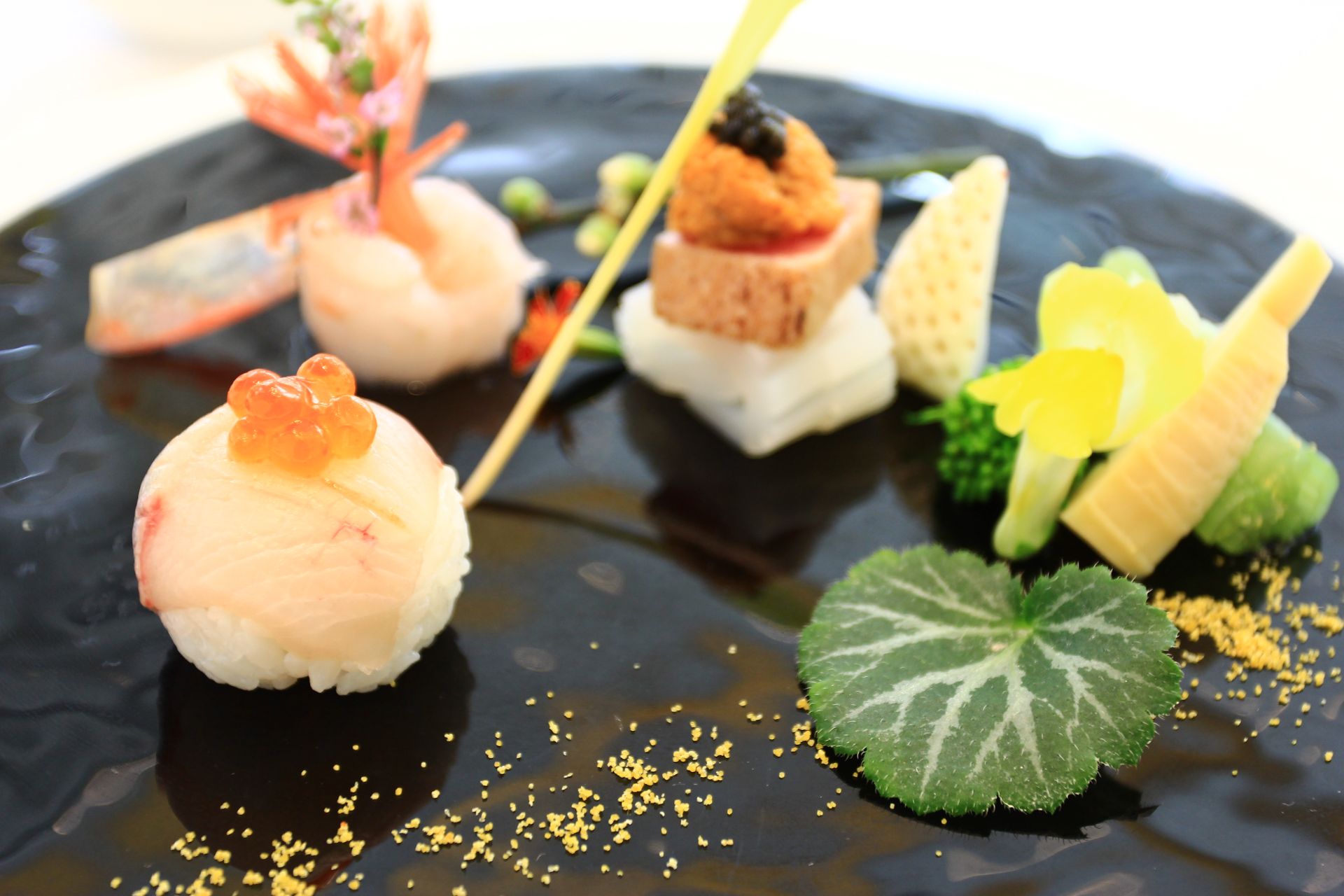
Ishikawa’s food is a direct expression of its landscape: cold coastal waters, mountain snowmelt, mineral-rich alluvial plains, and a culinary culture that has been refining itself for centuries. Whether you are sitting down to a full Kaga Kaiseki course in a ryokan, cracking open a kobakogani at a market counter, or simply ordering sushi at lunchtime, the quality of what is on your plate reflects everything the prefecture has put into it.
Food is only one part of what makes Ishikawa worth visiting. If you want to explore beyond the table, our Ishikawa travel guide covers the major sights from Kanazawa to the Noto coastline. And if the prefecture’s remarkable arts and craft traditions interest you, we have written about those too in our Ishikawa arts and culture guide.
When you are ready to start planning a trip, Follow Me Japan would love to help. Browse our Japan tour packages or get in touch to start planning your trip.