
If you are looking for a part of Japan where history, nature, and culture come together in one place, Ishikawa is hard to beat.
This long, slender prefecture runs down the west coast of Honshu, flanked on three sides by the Sea of Japan and on the fourth by the sacred peaks of Mt Hakusan. That geography is not just beautiful to look at. It shapes everything here, from the seafood pulled from cold coastal waters to the mountain rivers that feed the rice fields, hot springs, and valleys further inland. Ishikawa is a prefecture that has been quietly doing things well for a very long time.
Its history dates back to the Edo period when the ruling Maeda clan built Kanazawa into the wealthiest city in Japan outside of Edo, and channelled that wealth into arts, craftsmanship, and culture. That legacy is visible everywhere today, from the manicured gardens and geisha districts of Kanazawa to the lacquerware traditions of the Noto Peninsula. Ishikawa is one of Japan’s most rewarding destinations, and one of its most underrated.
Kanazawa
Kanazawa is the capital of Ishikawa and the largest city in the Hokuriku region. Once a powerful feudal castle town, it is one of the few major Japanese cities that emerged from World War II largely intact, which means its historical districts, gardens, and cultural institutions have been preserved in a way that is increasingly rare in Japan. Walking through Kanazawa, it is easy to feel the weight of that history, and to understand why the city has earned a reputation as one of Japan’s most cultured.
Kenrokuen Garden
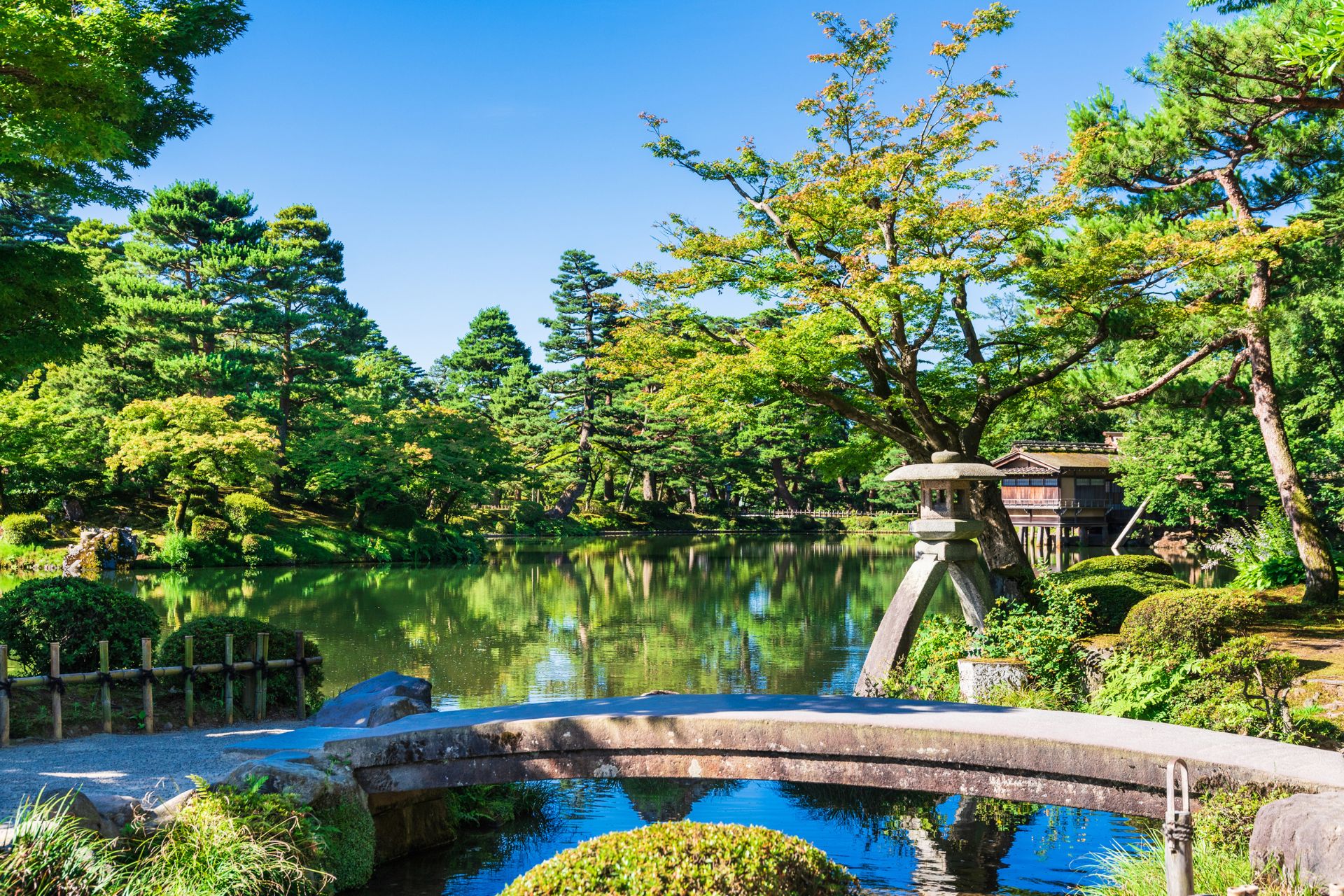
Kenrokuen is ranked as one of Japan’s Three Most Beautiful Gardens, and time spent here makes it easy to understand why. Its name translates as “garden of six sublimities,” referring to the six qualities that Chinese landscape theory considers essential for the perfect garden: spaciousness, seclusion, artifice, antiquity, water features, and broad views. Developed over generations by the Maeda clan as the outer garden of Kanazawa Castle, the 11.4-hectare garden achieves all six with ponds, stone lanterns, teahouses, bridges, and carefully shaped trees that together feel both grand and deeply peaceful.
And it is work visiting in every season. Cherry blossoms frame the entrance path in spring, maples blaze in autumn, and in winter, gardeners wrap the pine trees in conical rope structures called yukitsuri to protect them from the snow, creating one of the garden’s most iconic scenes.
Higashi Chaya District
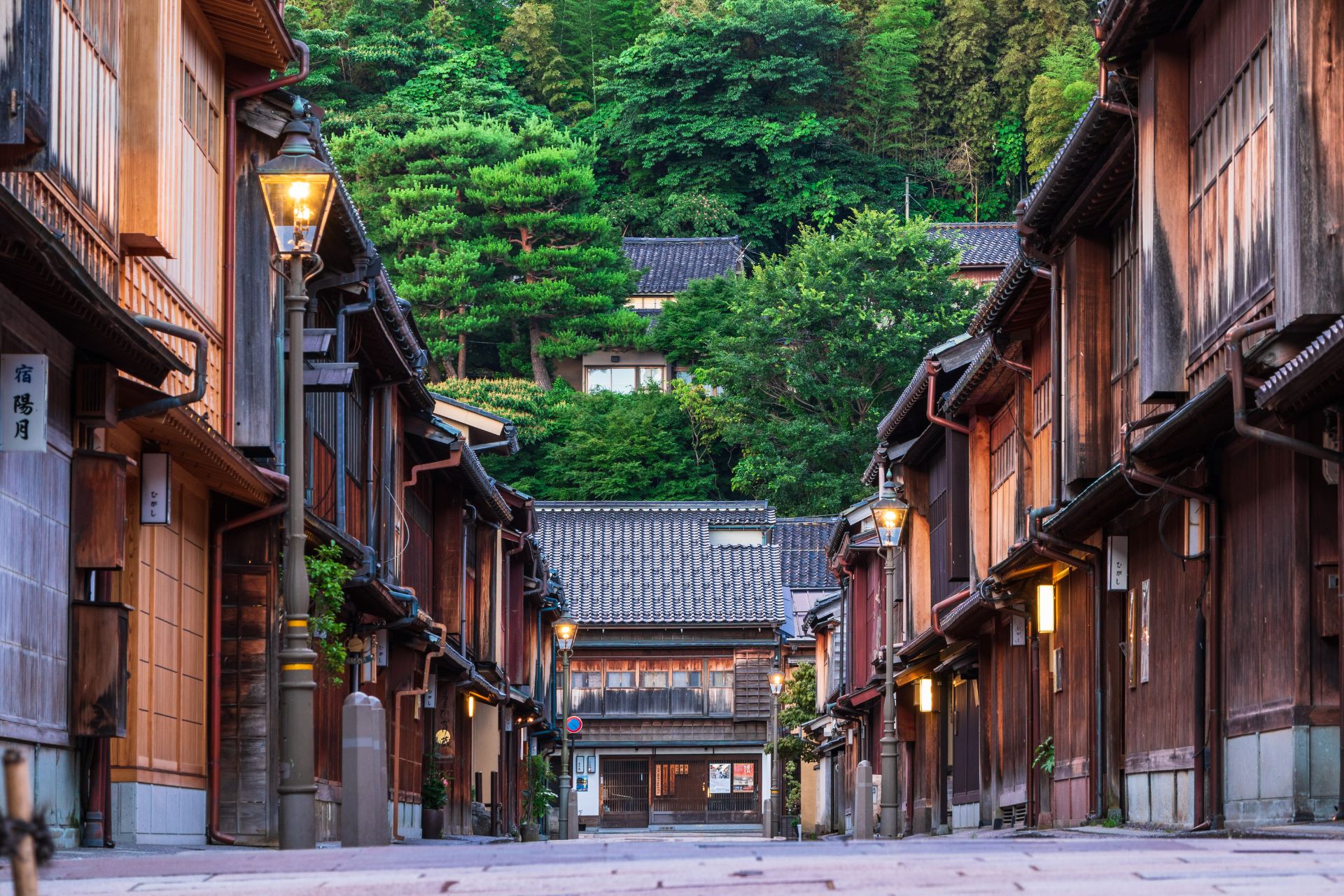
The beautifully constructed tea houses of the Higashi Chaya District carry a rich history behind their wooden latticed doors. These were the entertainment quarters of Kanazawa during the Edo period, and some of the buildings standing today are over 200 years old, carefully preserved as a testament to that era. Geisha still entertain guests here today with traditional music and dance, and the sounds of shamisen can occasionally be heard drifting through the narrow streets.
The district is one of the largest and best-preserved geisha districts in Japan outside of Kyoto. Strolling the main street in the morning before the crowds arrive is one of the most atmospheric experiences Kanazawa has to offer.
Omicho Market
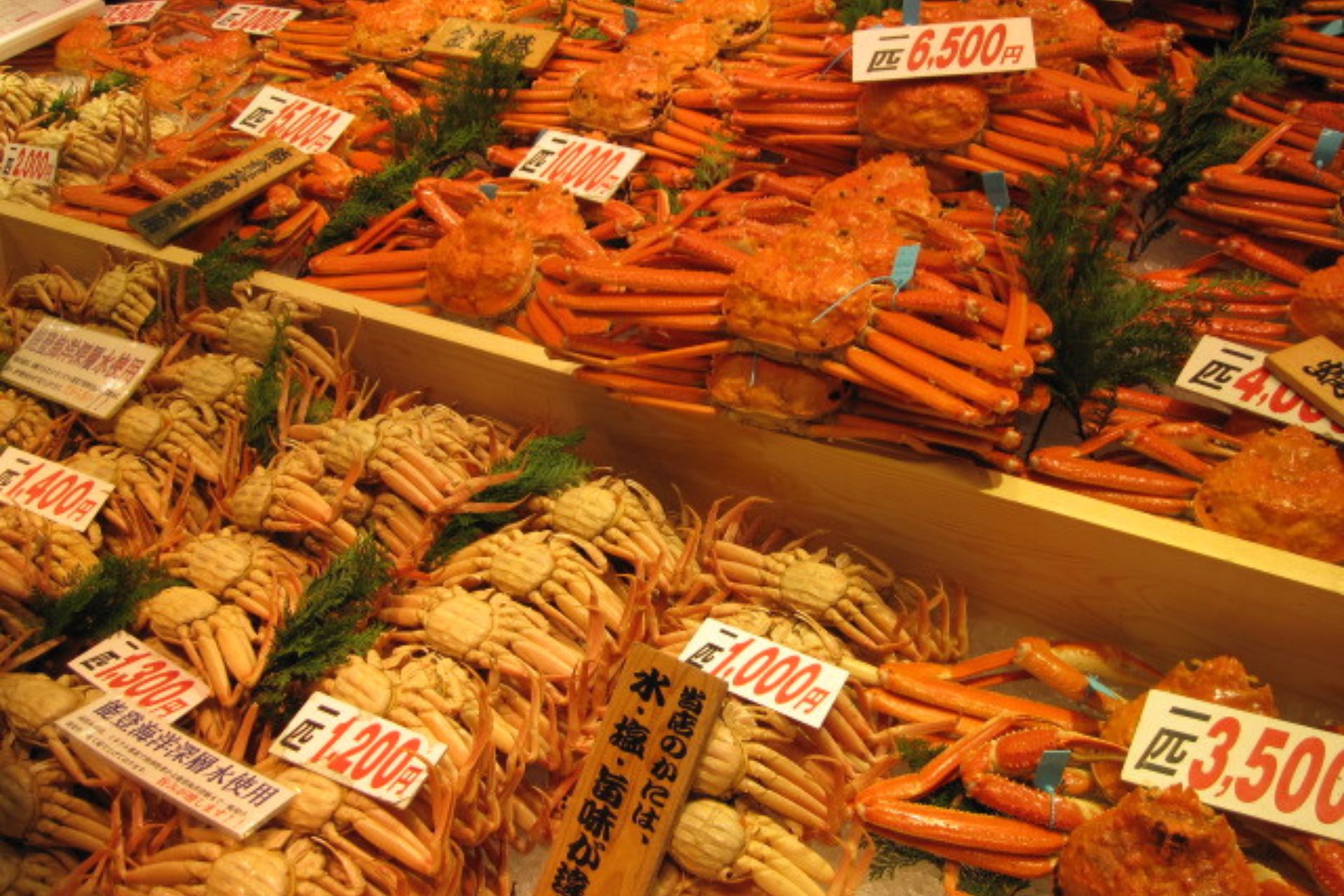
Known affectionately as Kanazawa’s Kitchen, Omicho Market has been at the centre of the city’s food culture for over 300 years. A bustling, covered network of streets lined with around 170 shops and stalls, it is a genuine working market where local chefs and residents shop alongside visitors. Renowned for the quality and immediacy of what is on offer, the seafood arrives daily from the coast. Rice bowls topped with fresh seafood are a lunchtime institution here, and in winter, the stalls overflow with crab, yellowtail, and shrimp.
The Noto Peninsula
The Noto Peninsula in the north of Ishikawa extends about 100 kilometres into the Sea of Japan. Its landscape shifts dramatically as you travel north: the western Sotoura coast is rugged and exposed, battered by the open sea, while the eastern Uraura coast faces the sheltered Toyama Bay and is quieter, lined with fishing villages and rice fields. In between, forested mountains and rural valleys make up a landscape that has been recognised by the United Nations as a Globally Important Agricultural Heritage System.
Note: The Noto Peninsula was severely affected by a major earthquake on 1 January 2024, which caused widespread damage particularly in the northern areas around Wajima and Suzu. Recovery is ongoing and many attractions and facilities have reopened, but we recommend checking the latest local conditions before travelling.
Senmaida Rice Terraces
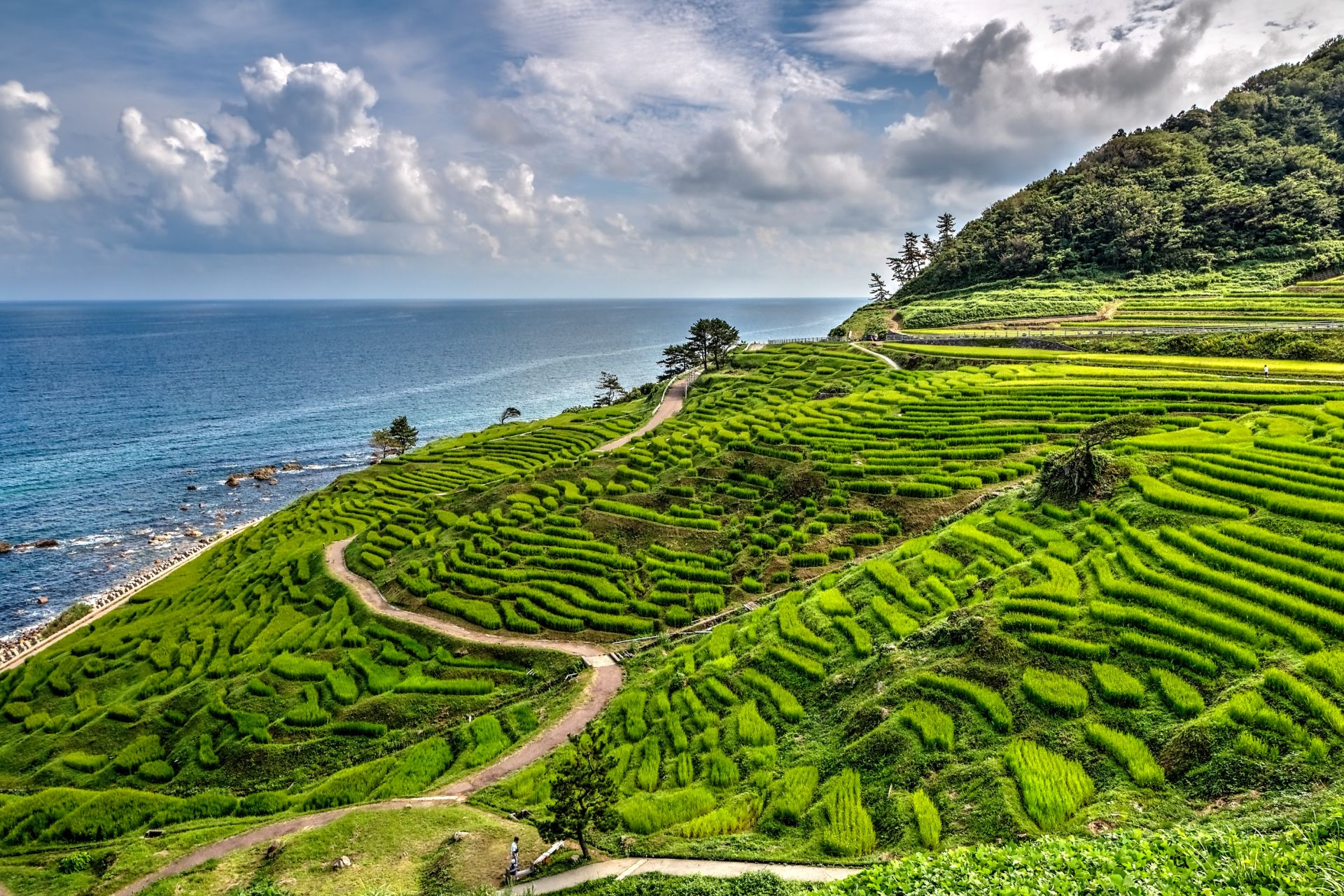
Near Wajima, over 1,000 small rice terraces cascade down a steep hillside to the very edge of the Sea of Japan. Known as Shiroyone Senmaida, it is one of Japan’s most iconic rural landscapes. The paddies are too narrow and steep for machinery, so the rice is still planted and harvested entirely by hand, just as it has been for generations. From October to March, 25,000 solar-powered LED lights illuminate the hillside each evening, turning the terraces into a quietly spectacular display of shifting colour after dark.
The Noto Coastline
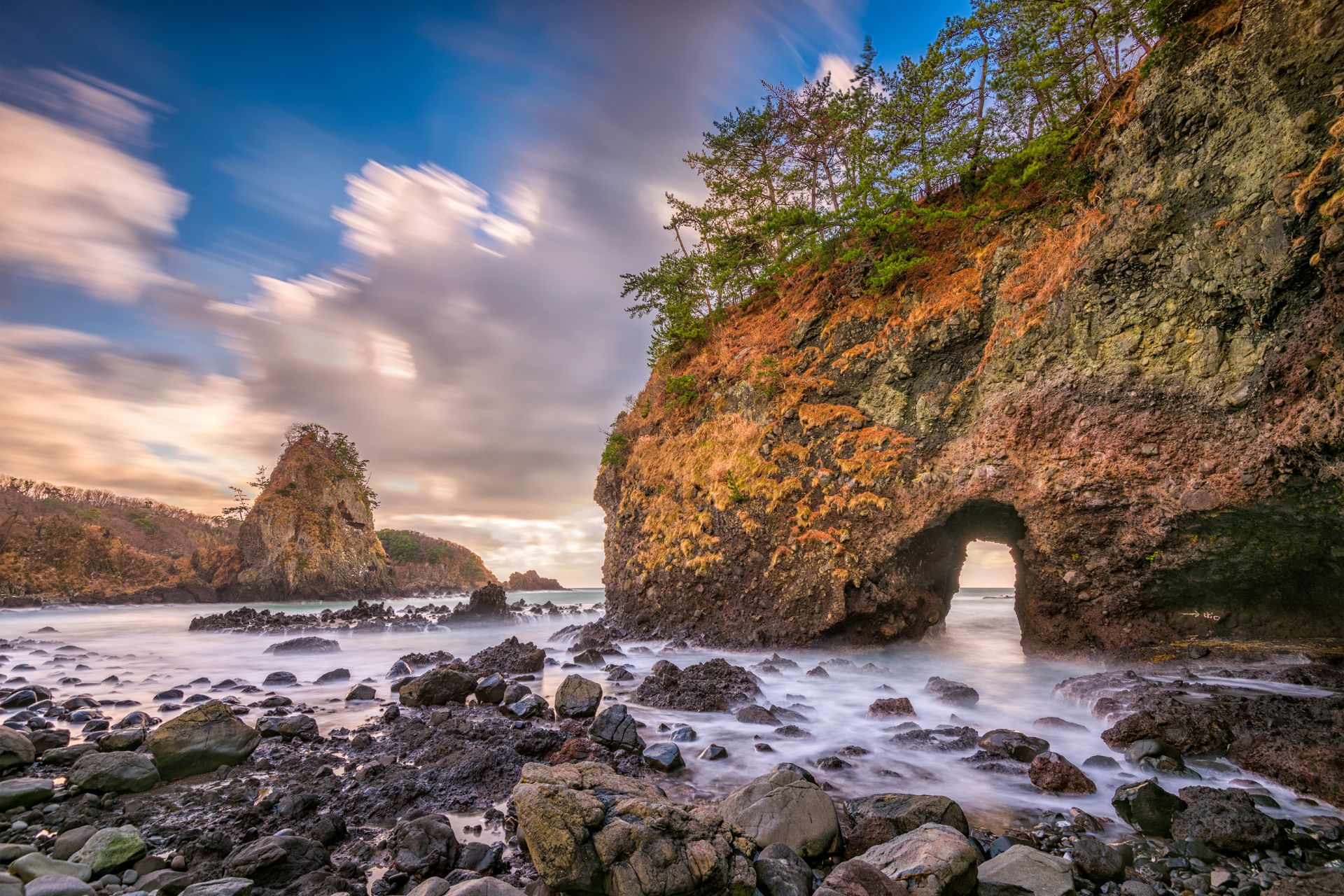
Driving the Noto coastline is one of the great pleasures of visiting this part of Ishikawa, and the scenery changes character as you make your way around the peninsula.
The western Noto Kongo Coast is where the Sea of Japan makes its presence felt most strongly. Some 30 kilometres of jagged cliffs and rock formations have been hammered into dramatic shapes by centuries of open-ocean waves. The most striking of these is Ganmon, a natural sea cave carved clean through a massive coastal rock. A little further along, the Hatagoiwa Rocks, a pair of sacred rocks bound together by a shimenawa rope, are one of the finest sunset viewpoints on the coast. As you continue north and round the tip of the peninsula, the mood softens. Near Suzu, Mitsukejima rises 28 metres straight out of the sea, an uninhabited rock island nicknamed Battleship Island for its silhouette, and one of Noto’s most memorable sights at sunrise.
Chirihama Beach Driveway
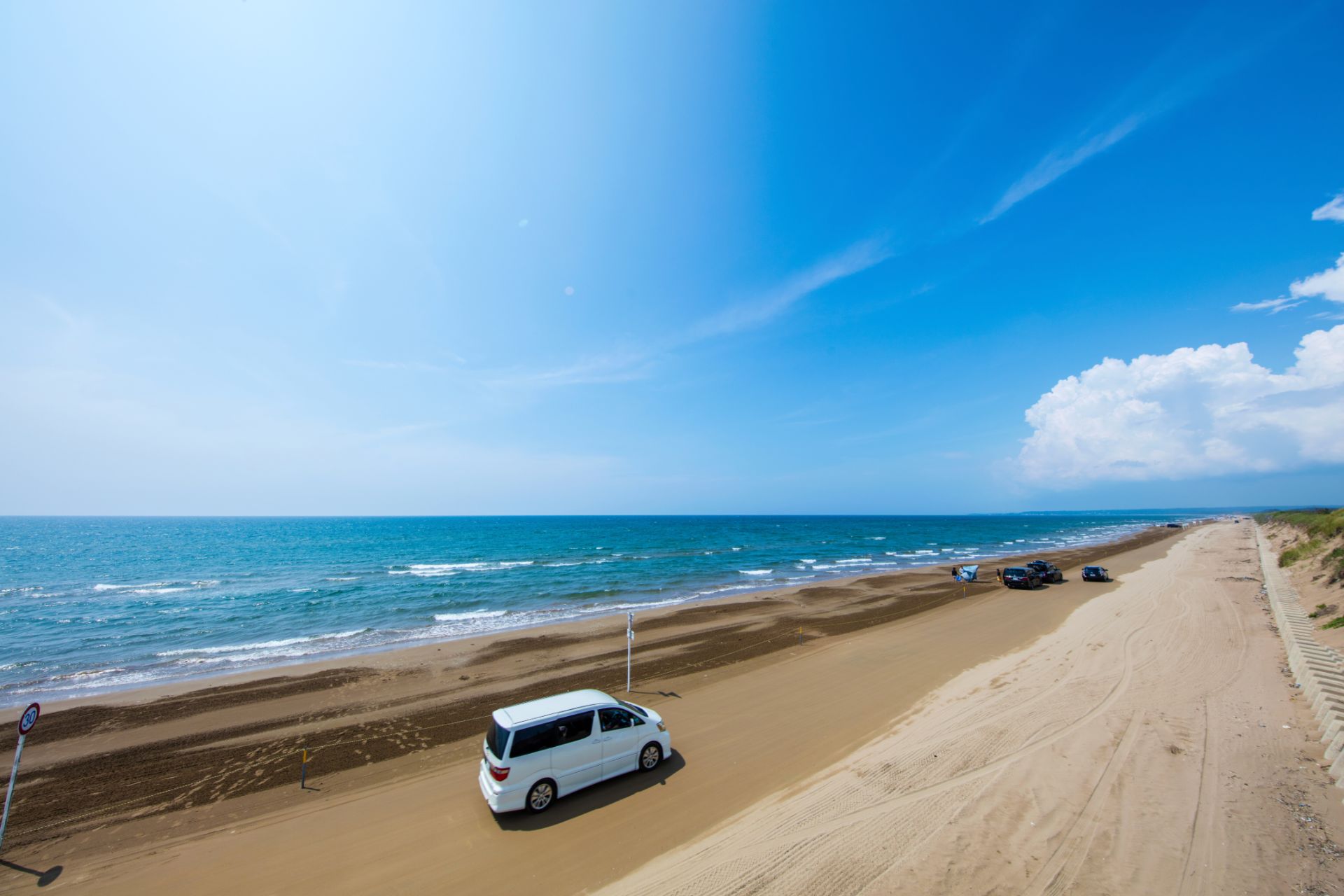
There are not many places in the world where you can drive your car along the edge of the sea. Chirihama Nagisa Driveway, an 8-kilometre stretch of compacted beach at the base of the Noto Peninsula, is one of them, and it is the only one in Japan.
The sand here is packed hard enough by fine river sediment to support cars, motorcycles, and even bicycles, with no permit or special vehicle required. You can pull over anywhere you like to walk the shore or watch the waves. It is a simple pleasure, but somehow an unforgettable one, and a perfect way to begin a road trip up the peninsula.
Kaga and Hakusan
The southern part of Ishikawa is anchored by two very different draws. The Kaga region is known for its historic hot spring towns, four of which, Yamanaka, Yamashiro, Katayamazu, and Awazu, together form the Kaga Onsen area. Further south and inland, the majestic Mt Hakusan rises within Hakusan National Park, one of Japan’s Three Holy Mountains.
Natadera Temple
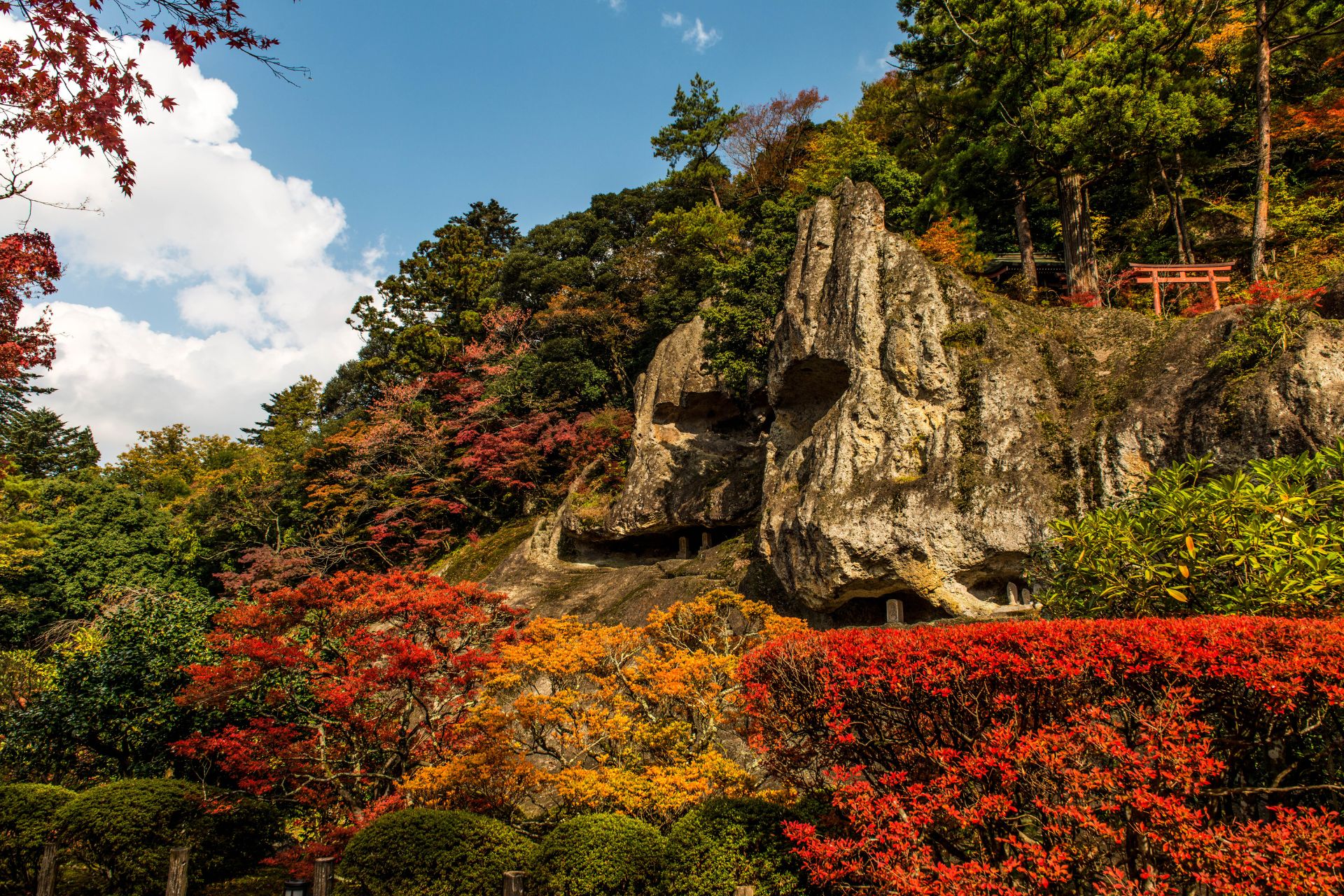
Few temple complexes in Japan feel quite as deeply rooted in their surroundings as Natadera. Founded over 1,300 years ago and dedicated to nature worship, this is a place where architecture and landscape are inseparable. Buildings are built into and around the natural rock face, caves in the cliffside shelter statues of deities, and moss, ferns, and trees are as much a part of the complex as the structures themselves.
Walking through the complex feels less like visiting a temple and more like stepping into a landscape that has been shaped, slowly and with great care, into a place of contemplation. The temple has been recognised as both a cultural asset and a site of scenic beauty, and that dual recognition is well earned.
Kakusenkei Gorge
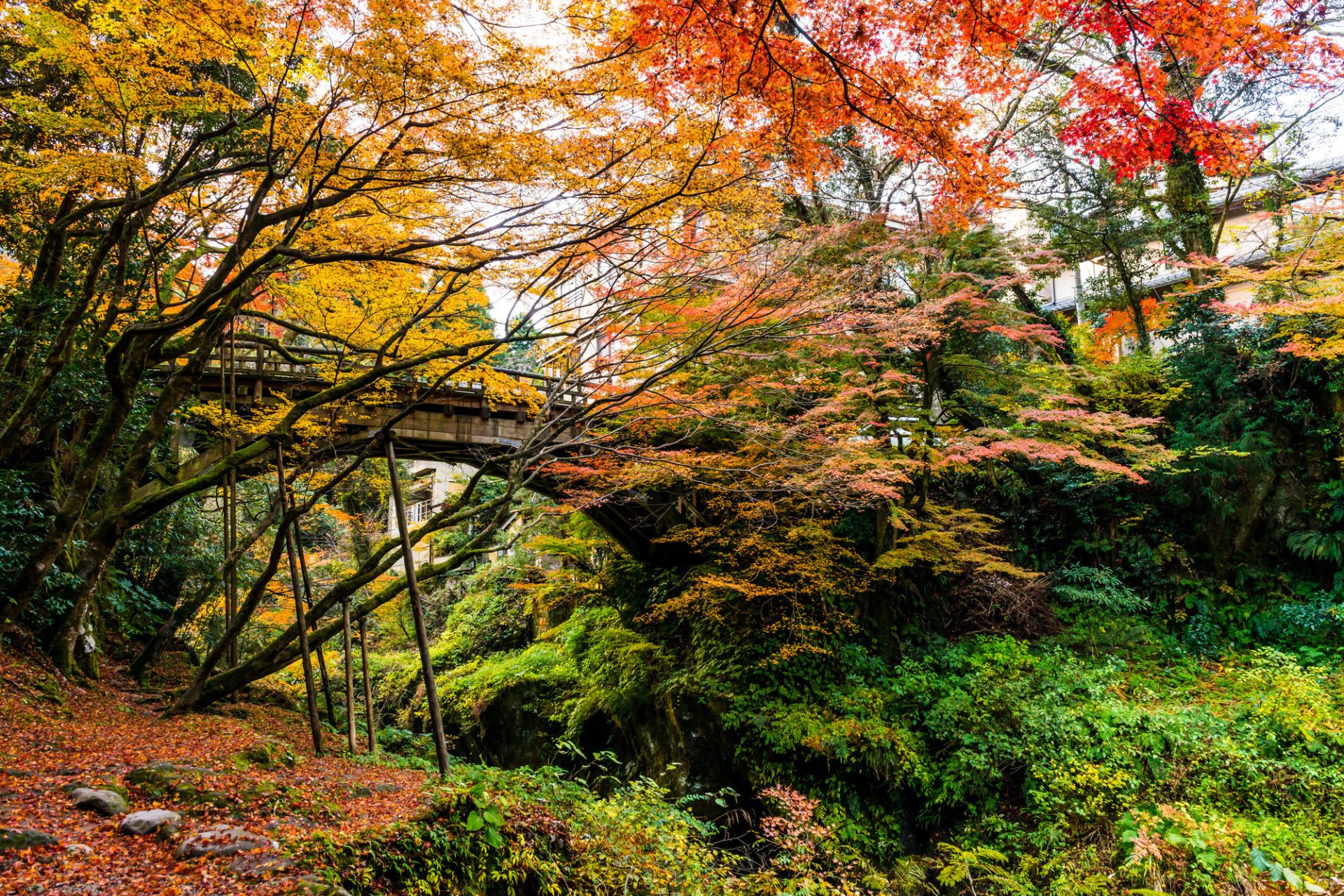
In Yamanaka Onsen, the Kakusenkei Gorge runs along the Daishoji River through a narrow valley lined with sculpted rocks and dense greenery. It is a beautiful spot for a gentle walk, particularly in the changing seasons.
Three bridges cross the gorge, each quite different in character. The Ayatori Bridge is built from steel in a distinctive S-shaped design. The Kurotani Bridge is an older stone structure. The most famous of the three is the Korogi Bridge, a traditional cypress-wood bridge that frames dramatically different views in each season. In winter, when snow settles on the rocks and trees and the gorge falls quiet, the atmosphere becomes particularly tranquil.
Hakusan Shirakawa-go White Road
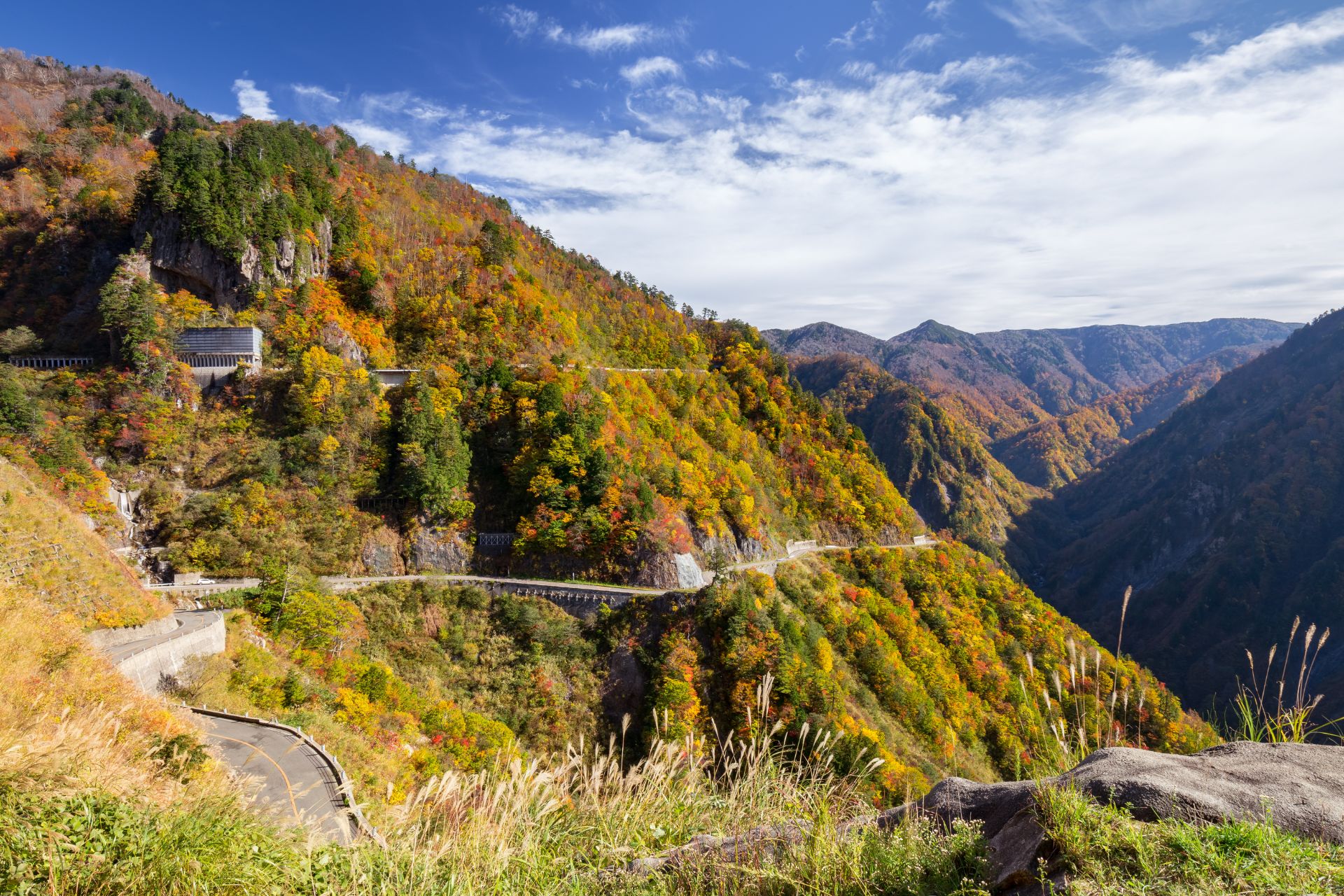
Open for only a few months each year, the Hakusan Shirakawa-go White Road is a scenic mountain route connecting Hakusan in Ishikawa to the historic village of Shirakawa-go in Gifu Prefecture. The road winds through the forests of Hakusan National Park, passing deep valleys, clear rivers, and a series of waterfalls along the way.
Short walking trails branch off from the road and lead into the forest, where the air is clean and cool even in summer. In autumn, the colours along the entire route are spectacular as red, orange, and yellow sweep across the mountainsides in every direction, making this one of the most scenic drives in the Hokuriku region.
Plan Your Ishikawa Journey
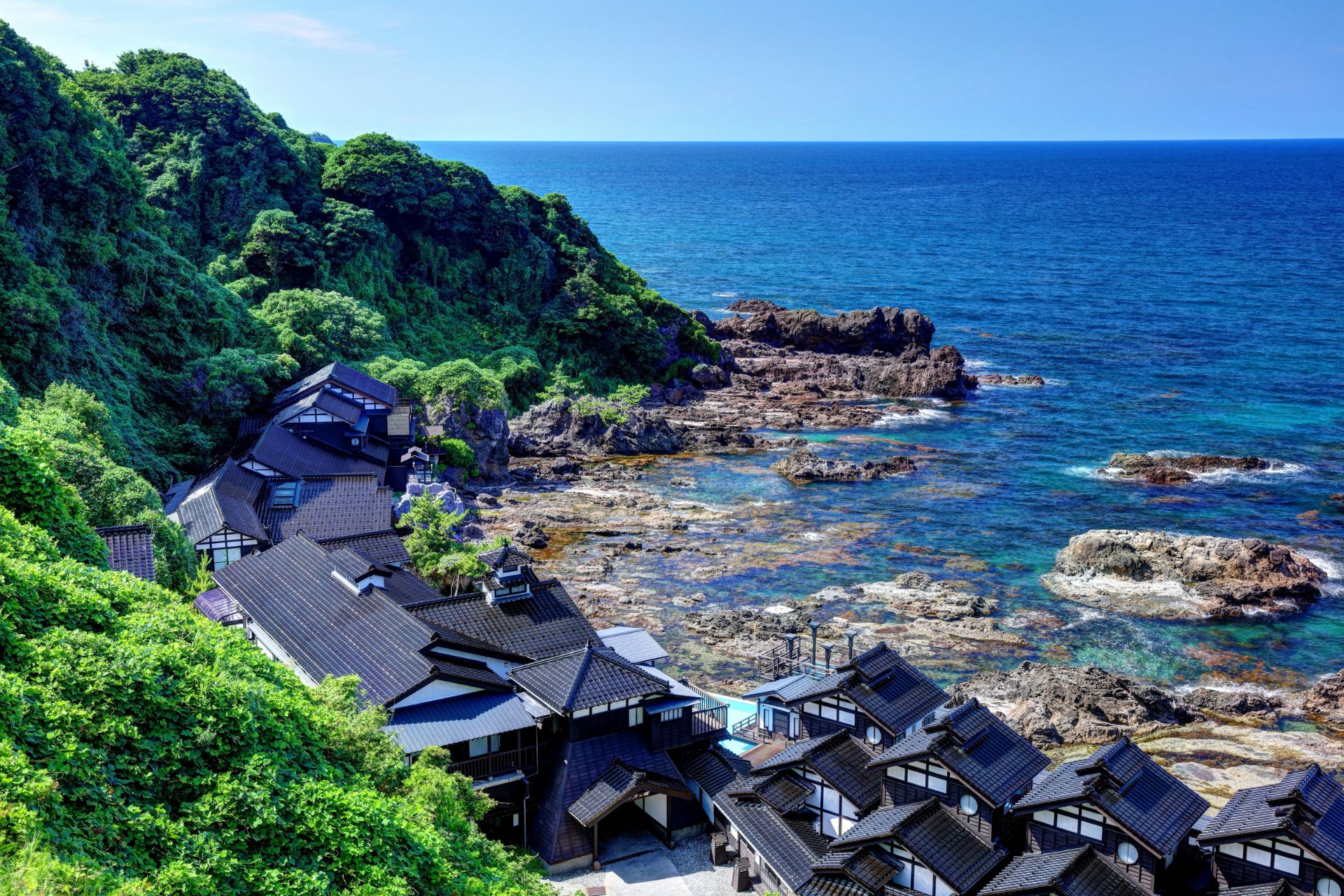
Ishikawa is a prefecture that reveals itself gradually. Kanazawa rewards slow, attentive exploration. The Noto Peninsula opens up best by car. And the Kaga and Hakusan areas offer a quieter, more restorative kind of travel. Together, they make for a remarkably complete destination.
For a closer look at what to eat in Ishikawa, visit our Ishikawa food guide. If the prefecture’s arts and craft traditions interest you, our Ishikawa arts and culture guide covers that in more detail.
If you would like to explore Ishikawa with us, we would love to help you plan it. Browse our Japan tour packages or get in touch to start planning your trip.