
In Ishikawa, art and culture are not things you visit. They are things you encounter, almost everywhere you go.
The foundations were laid during the Edo period, when the ruling Maeda clan chose to invest their considerable wealth not in military power but in culture, education, and the development of skilled craftsmen. Fine arts such as tea ceremony, flower arrangement, and Noh theatre flourished. Traditional crafts, including lacquerware, ceramics, silk dyeing, and gold leaf, developed to a level of refinement that made Kanazawa famous. The city earned the nickname “kingdom of crafts,” a title it has quietly held ever since.
What makes Ishikawa remarkable today is that none of this feels like history. The love of art and culture has been passed down through the generations and remains a genuine part of daily life here. Practitioners continue to refine and pass on their skills. Traditional crafts are woven into the city’s objects, spaces, and food. Wherever you go in Ishikawa, culture is not something preserved behind glass. It is still being made.
Kanazawa Gold Leaf
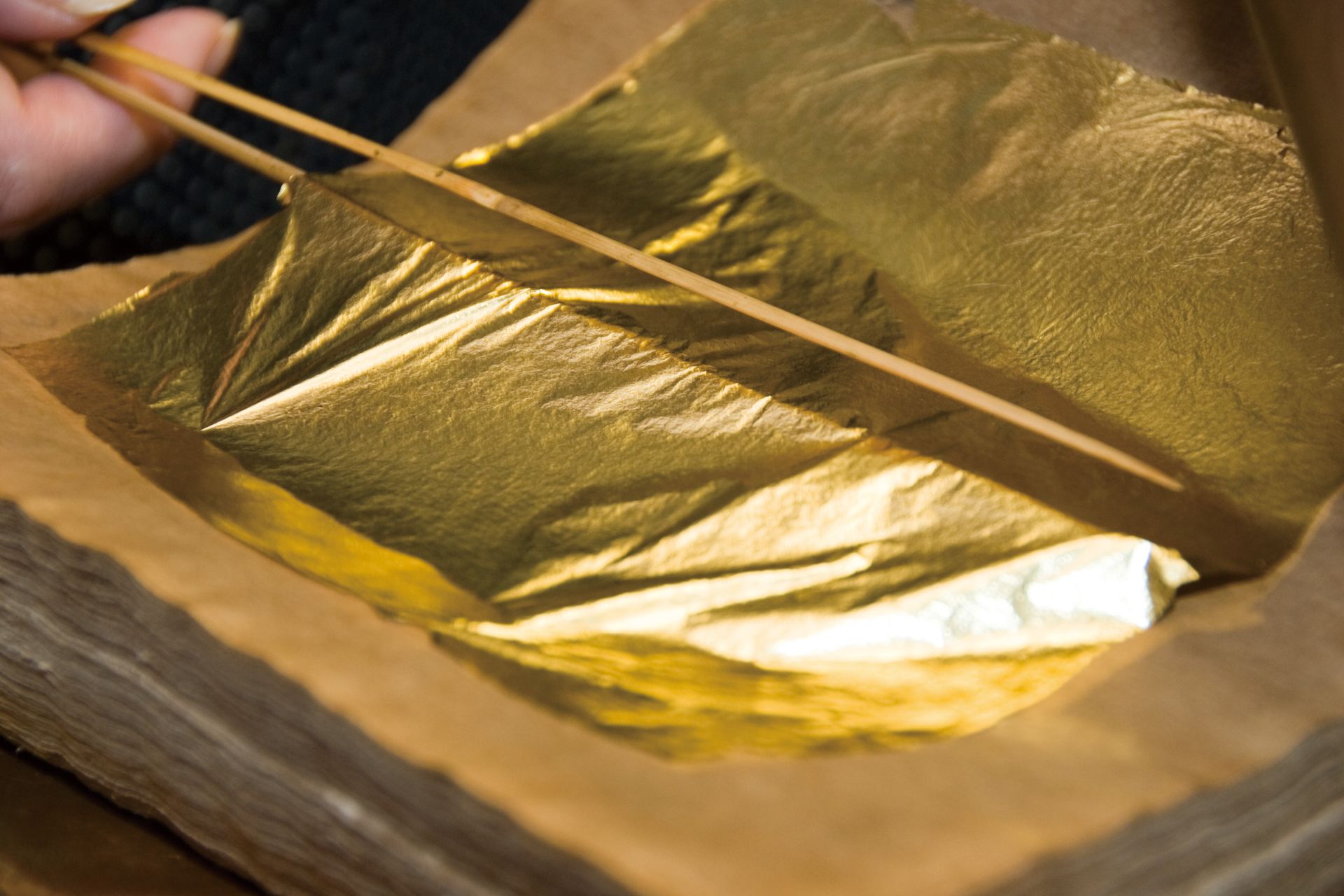
The name Kanazawa translates as “gold marsh,” a name that came from the discovery of gold particles in the city’s grounds. That connection between Kanazawa and gold runs deep, and nowhere is it more visible today than in the city’s extraordinary gold leaf industry.
Gold and silver leaf production in Kanazawa is believed to have begun in 1593, when Lord Maeda Toshiie ordered the domain to produce gold and silver leaf for ceremonial use. Today, the city produces 99% of all gold leaf made in Japan, a dominance built on centuries of accumulated skill and a climate that is naturally well suited to the craft.
Gold leaf has permeated Kanazawa’s culture in ways that go far beyond temple gilding and lacquerware. Walk through the city and you will find it on pottery, cosmetics, confectionery, and one of Kanazawa’s most famous treats: soft-serve ice cream wrapped in a full sheet of gleaming gold. Visitors can try their hand at gold leaf application at several workshops across the city, and take a deeper look at the craft’s history and techniques at Japan’s only museum dedicated entirely to gold leaf, the Kanazawa Yasue Gold Leaf Museum.
Wajima Lacquerware
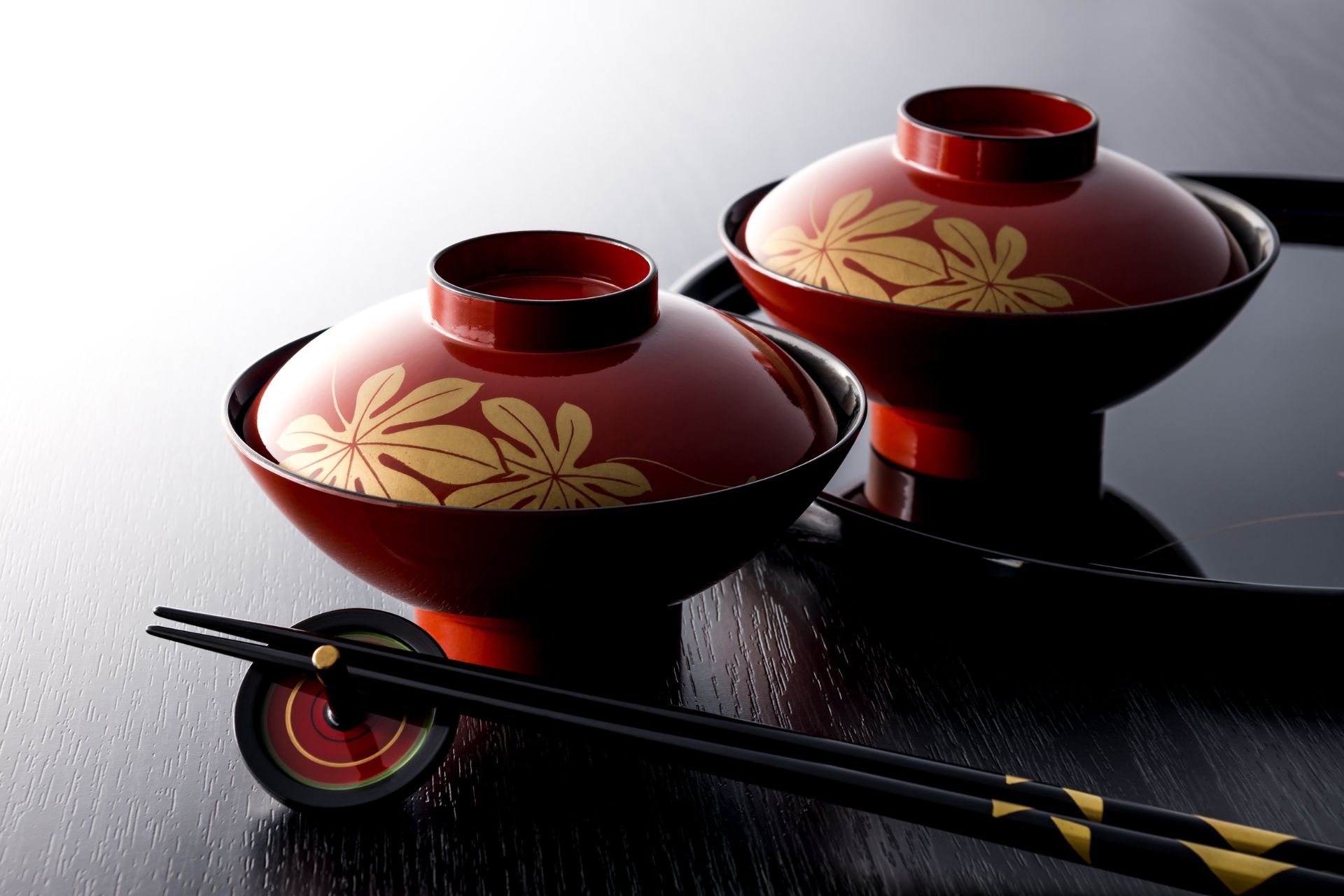
It is almost impossible to mention Wajima City without talking about its lacquerware. Recognised as a traditional Japanese craft, Wajima lacquerware stands as one of the finest expressions of the form in the country.
Each piece begins with locally sourced natural wood, shaped and prepared before the lacquering process begins. What follows is a painstaking sequence of over 100 steps, in which more than 70 coats of lacquer are applied one by one, each coat allowed to dry and harden before the next is added. The process is slow and exacting, and every stage is completed by a skilled craftsman with years of experience behind them. The result is a piece that is not only beautiful but genuinely durable, hardy enough to be used as an everyday object while still carrying the elegance of fine craftsmanship.
The lacquerware is further decorated using a technique called chinkin, in which designs are engraved into the lacquered surface and then filled with gold. It is this final touch that elevates Wajima lacquerware from practical craft to art object, adding a layer of quiet opulence that is distinctly Wajima.
The quality of the craft depends on the skill of the craftsmen, and artisans in Wajima have been developing and refining those skills for generations. That culture of continuous improvement is widely credited with sustaining Wajima lacquerware’s reputation and ensuring the craft has never stood still.
Kutaniyaki Porcelain
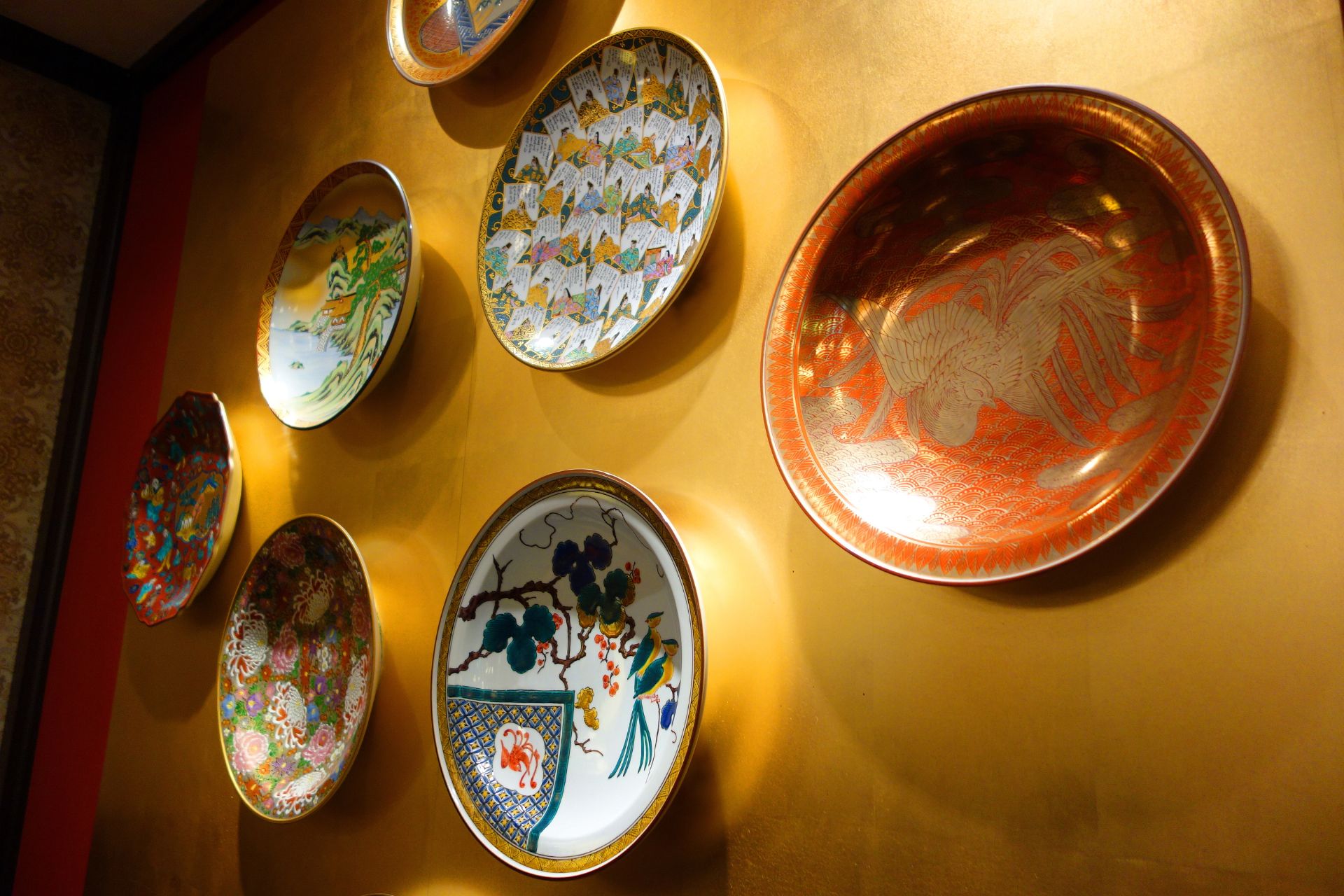
Kutaniyaki porcelain has its origins in the mid-17th century, when stone suitable for porcelain making was discovered in the Kutani mines in the Kaga area of Ishikawa. A representative was dispatched to learn the craft from masters in Arita, a kiln was established, and Kutaniyaki was born. Production was later interrupted for reasons that remain unclear, but the tradition was revived in the early 19th century and has continued without pause since then.
The clay used for Kutaniyaki is mostly quarried locally, then treated to remove impurities before the potter works it into its final form. Each piece is fired in the kiln up to four times, with glaze, overglaze, and gold or silver decoration applied in stages between each firing. The process is time-consuming and technically demanding, which makes the finished results all the more impressive.
The defining characteristic of Kutaniyaki is bold, unapologetic colour. Where much traditional Japanese pottery favours restraint, Kutaniyaki embraces vivid blues, greens, yellows, and reds, laid down in dramatic, unconventional designs. This use of strong colour in ceramics was highly unusual when the craft first emerged, and it made Kutaniyaki stand out immediately. The distinctive overglaze technique has earned the pottery lasting admiration for both its technical quality and its visual impact, winning admirers across Japan and beyond.
Kaga Yuzen
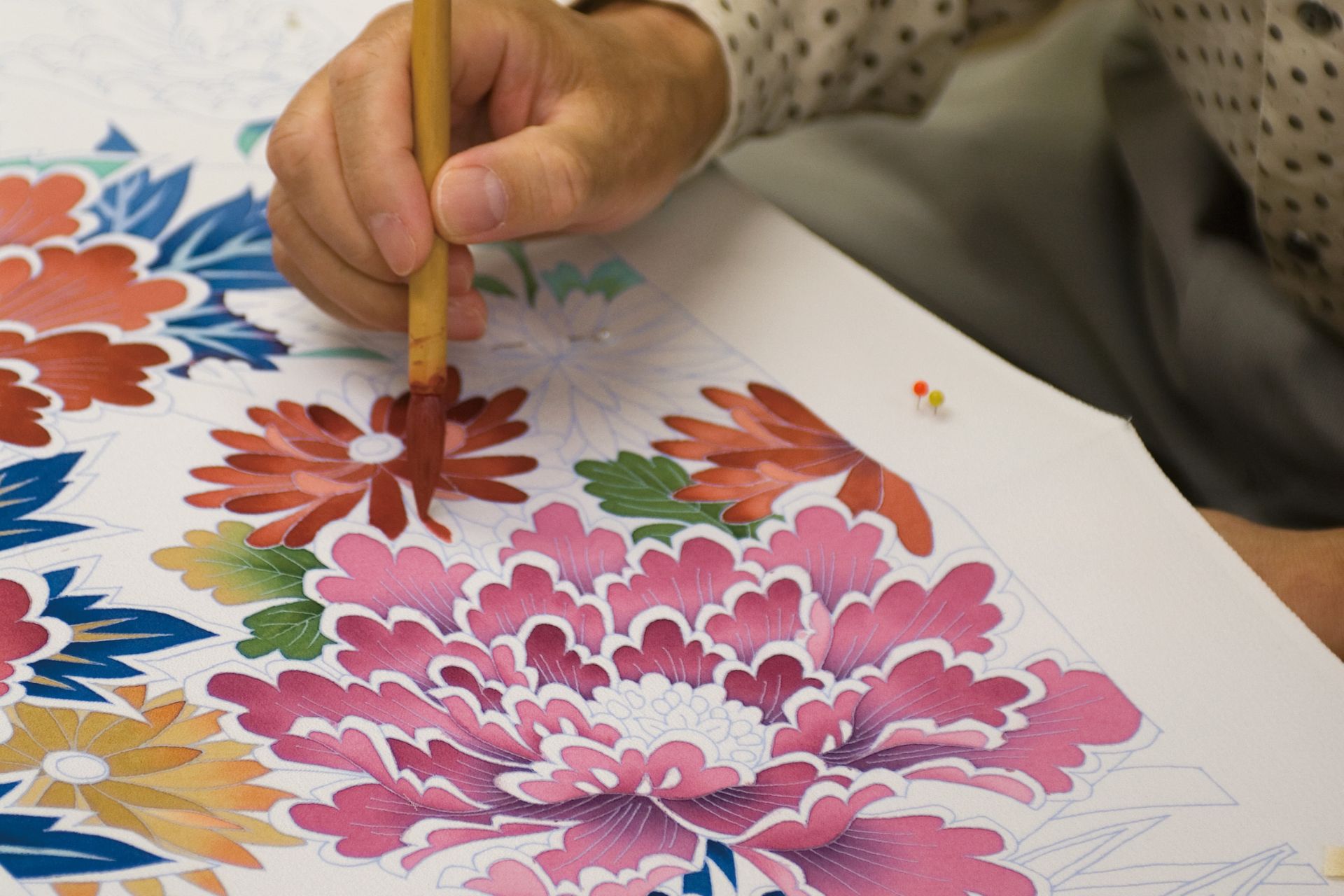
Yuzen dyeing is the technique of hand-dyeing silk for kimonos, using a process that creates fine, painterly designs featuring subjects such as people, birds, flowers, and natural scenes. While Yuzen dyeing is practised in a number of places across Japan, Kaga Yuzen is considered one of the most refined and sought-after expressions of the form.
What sets it apart is its aesthetic character. Kaga Yuzen embodies a samurai-style elegance: quietly powerful, restrained, and deeply attentive to natural beauty. Embroidery and accessories are deliberately avoided, keeping the focus entirely on the dyed design itself. The realism of the imagery is a defining trait, with gradation techniques known as bokashi used to reproduce the subtle shading found in nature.
The style has its roots in a plain dyeing technique called ume zome. In the 18th century, a master dyer named Miyazaki Yuzen came to Kanazawa and transformed the technique, bringing the colourful, intricate aesthetic that defines Kaga Yuzen today. His influence gave the craft its name and set it on the path it continues to follow.
Kaga Yuzen is characterised by its use of five specific colours, known as Kaga gosai: a particular range indigo, dark crimson, yellow ochre, grass green, and ancient purple that together create the palette most closely associated with the craft. The entire process of creating a Kaga Yuzen piece, from the initial design through to the final rinse of the cloth in the river, is completed by a single artisan. That means every piece is entirely personal, a reflection of one person’s eye, skill, and sensibility. It is that quality of individual craft that makes Kaga Yuzen a luxury product in the truest sense.
Geisha
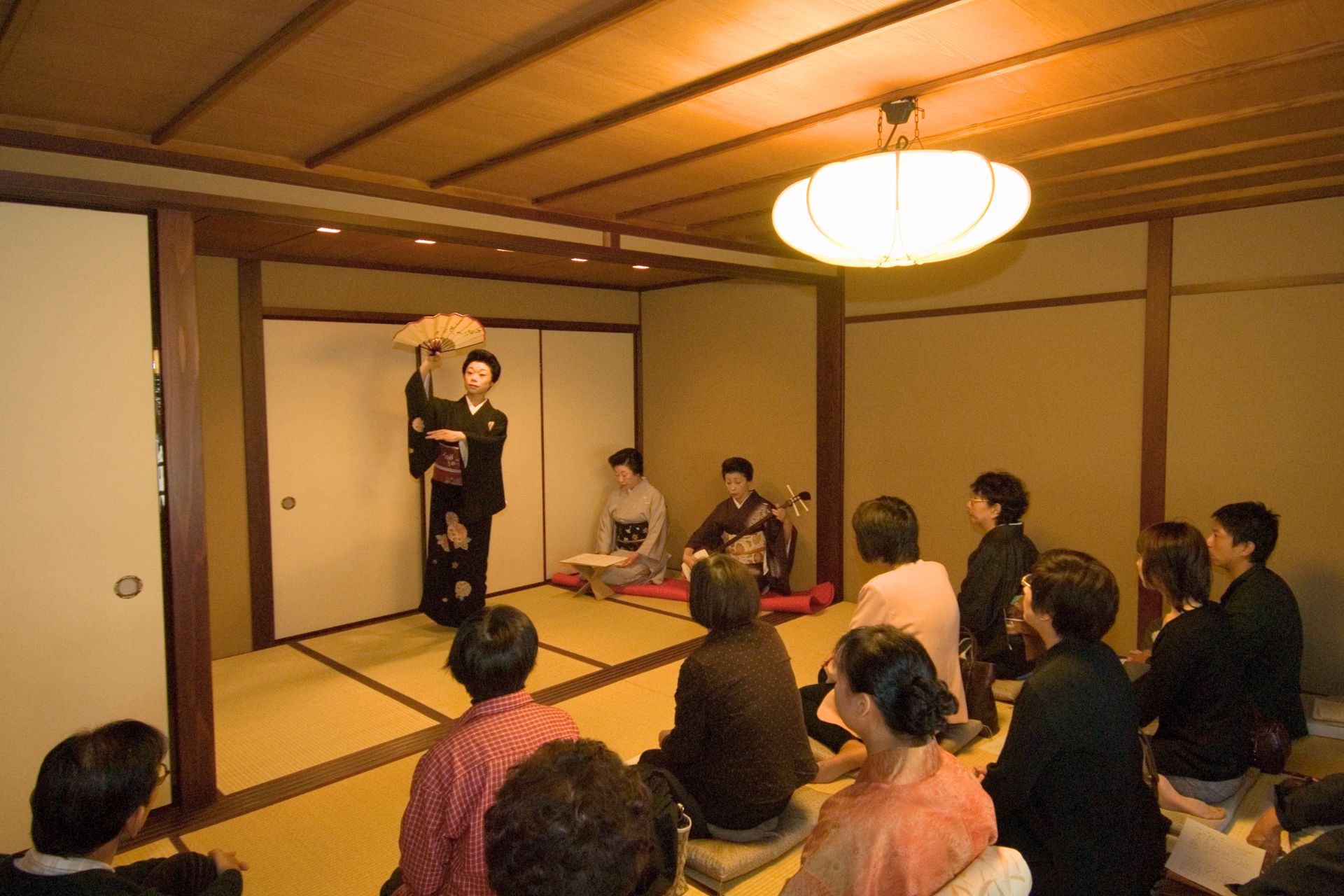
Kanazawa is one of the few cities in Japan where geisha culture has survived and remained genuinely active into the modern age. The city escaped significant damage during World War II, which meant its traditional architecture, districts, and cultural institutions were preserved intact. That preservation extends to the geisha tradition itself.
Known locally as geiko, Kanazawa’s geisha are professional performing artists trained in traditional music, dance, and the art of entertaining guests at tea houses. Their world is governed by strict customs that have been maintained since the Edo period. Teahouses in Kanazawa traditionally accept guests only by introduction from a regular patron, keeping the experience exclusive and the traditions intact.
Kanazawa has three historic chaya districts where geisha culture is still practised: Higashi Chaya, Nishi Chaya, and Kazuemachi. The largest and most visited is Higashi Chaya, established in 1820 when the geisha houses that had been scattered across central Kanazawa were consolidated into three formal districts. The beautifully preserved wooden teahouses that line its streets, characterised by the distinctive latticed kimusuko windows on their ground floors, date back nearly 200 years.
Today, around 40 geiko continue to practise and perform across Kanazawa’s three districts. While the teahouse world remains largely private and invitation-only, it is possible for visitors to arrange a geisha experience in Kanazawa, and for those who do, it is something quite unlike anything else the city has to offer.
Gojinjo Daiko
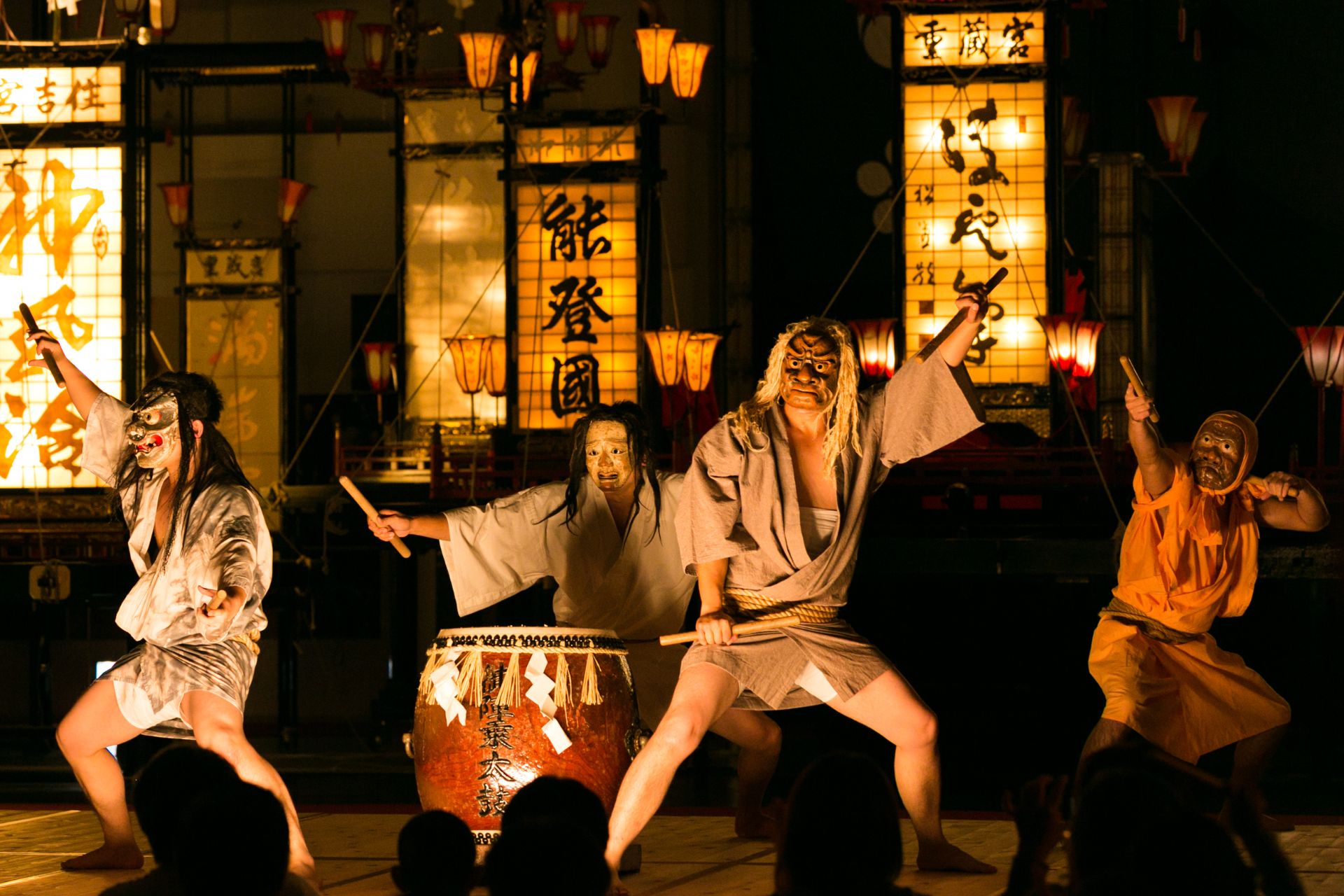
The Gojinjo Daiko drum performance from the Nafune area of Wajima City is one of the most visceral cultural experiences Ishikawa has to offer. Drummers wearing demon masks and wigs made from seaweed move around a single drum in an aggressive, high-energy display of rhythm and raw power. The performance is deliberately intimidating, designed from its very origins to unsettle whoever is watching.
The origins of Gojinjo Daiko date to 1576, when the armies of warlord Kenshin Uesugi attempted to invade the Noto Peninsula. The local people, mostly farmers with no weapons or military training, resorted to a different kind of defence. Using whatever materials they had to hand, they fashioned ferocious masks from tree bark and wigs from seaweed, then took to the shore at night, beating a war drum as loudly and aggressively as they could. The display was alarming enough to send the enemy into retreat without a single blow being struck.
Today, Gojinjo Daiko is performed as entertainment at festivals and events in Wajima City and has been designated an Intangible Cultural Asset of Ishikawa. Its power to unsettle has not faded in the least.
A Culture Worth Experiencing in Person
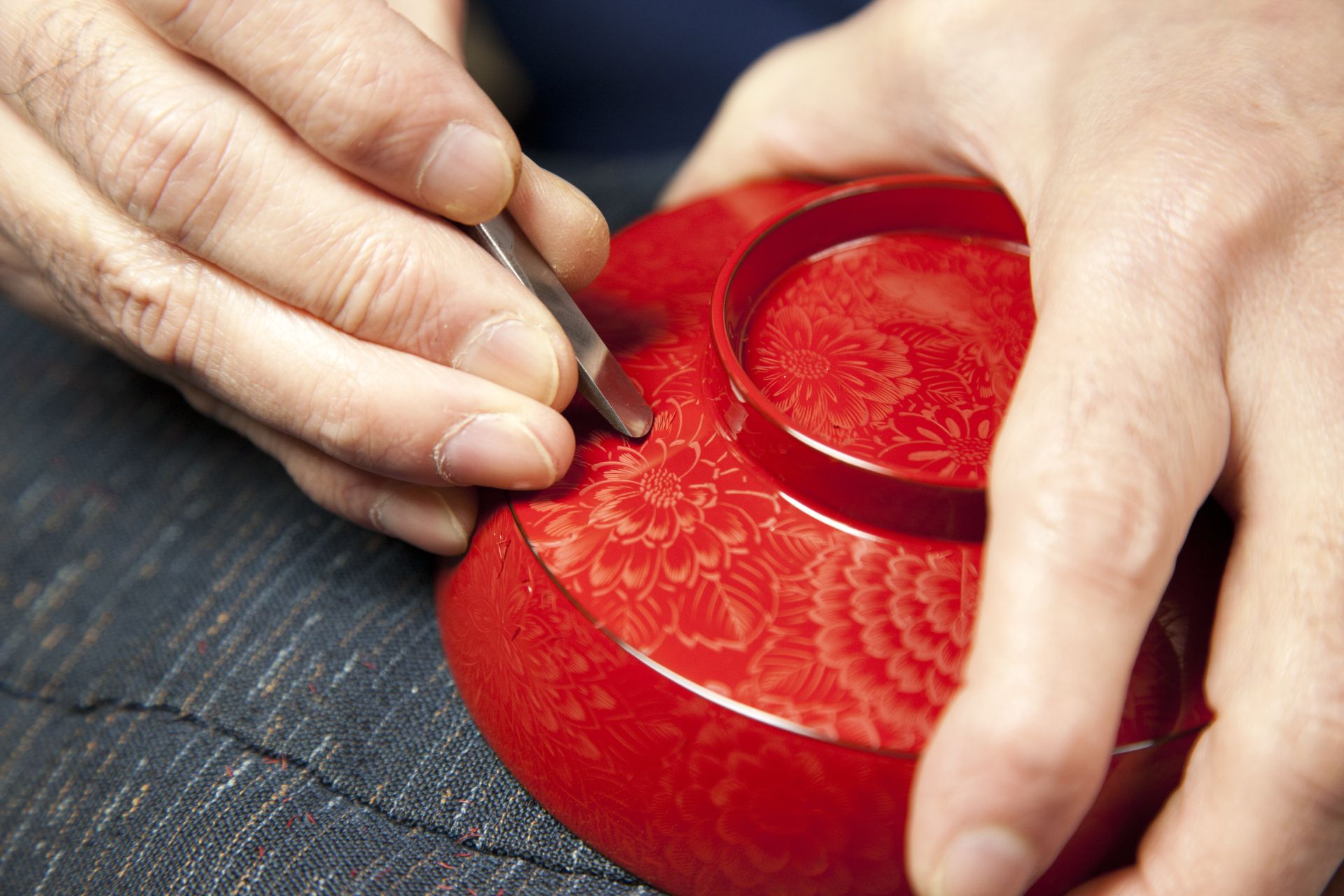
Ishikawa’s art and culture is not something that can be fully appreciated from the outside. The real experience is in watching an artisan apply gold leaf, running your fingers along a lacquered bowl built up through 70 coats of work, or standing in Higashi Chaya as the sound of shamisen drifts out through a latticed window. These are things that stay with you.
Ishikawa has a lot more to discover beyond its crafts. If you have not already, our guide to Ishikawa’s sights and attractions is a good place to start, covering everything from Kanazawa’s gardens and geisha districts to the wild coastline of Noto. And if the food side of things interests you, we have written about what to eat in Ishikawa too.
When you are ready to start planning a trip, Follow Me Japan would love to help. Browse our Japan tour packages or get in touch to start planning your trip.